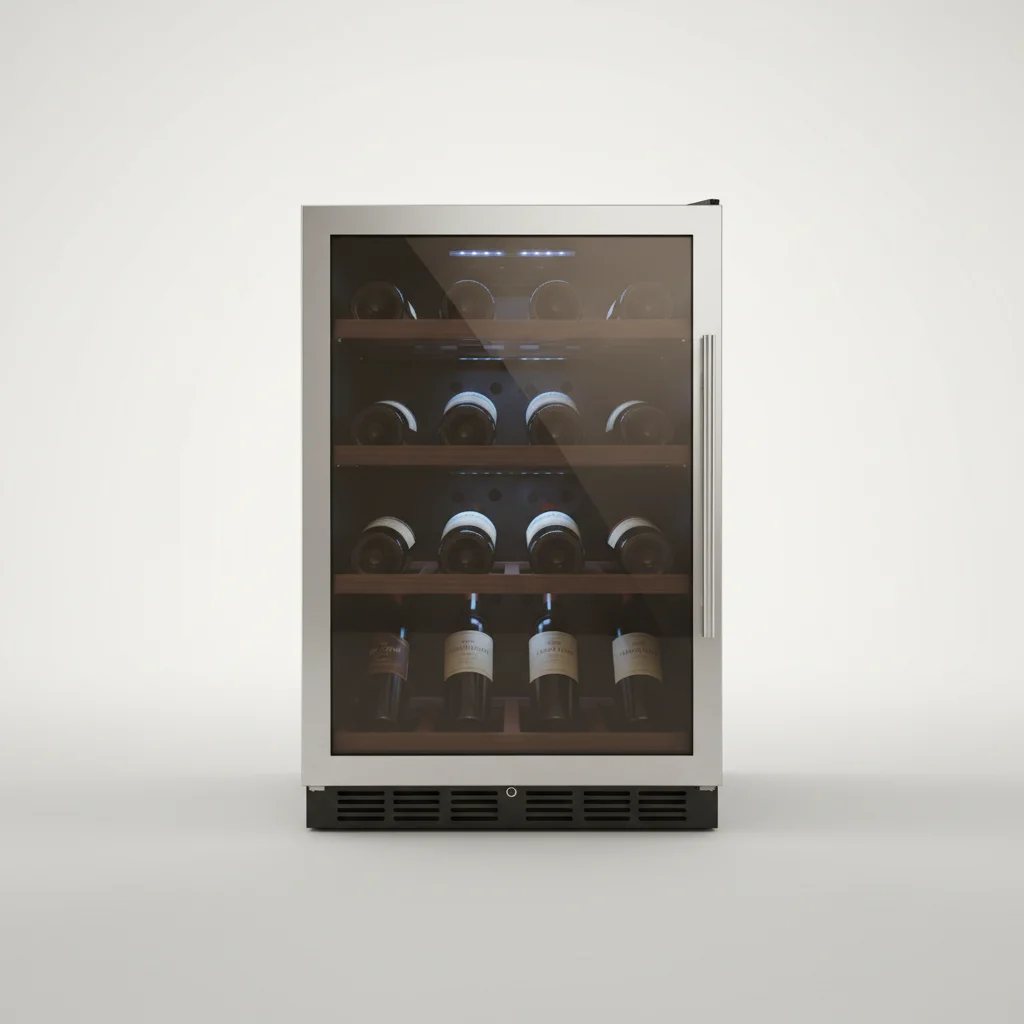
Most wine cooler glass doors offer some level of UV protection, typically around 90-95% for standard double-pane, tempered glass. However, for optimal protection against harmful UV rays that can degrade wine, look for models specifically featuring low-emissivity (Low-E) or argon-filled glass, which can block up to 99% of UV radiation.
Why UV Protection Matters for Wine Storage
Ultraviolet light is a significant enemy of wine. Exposure to UV rays can cause a chemical reaction within the wine, leading to what is known as ‘light strike.’ This phenomenon alters the wine’s flavor and aroma, often resulting in unpleasant notes described as wet cardboard, cabbage, or burnt rubber. Red wines are generally more resilient, but white wines and sparkling wines are particularly susceptible due to their lower tannin content. A good wine cooler’s primary function is to provide a stable, dark environment, and the glass door plays a crucial role in maintaining this.
Even indirect sunlight or prolonged exposure to artificial light can have detrimental effects over time. Therefore, investing in a wine cooler with robust UV protection is not just a luxury but a necessity for preserving the quality and longevity of your wine collection. It ensures that your wines age gracefully and retain their intended characteristics until they are ready to be enjoyed.
Types of Glass Doors and Their UV Blocking Capabilities
|
Our Picks for the Best Wine Cooler in 2026
As an Amazon Associate I earn from qualifying purchases.
|
||
| Num | Product | Action |
|---|---|---|
| 1 | Ivation 12 Bottle Compressor Wine Cooler Refrigerator w/Lock, Large Freestanding Wine Cellar Fridge, 41f-64f Digital Temperature Control Glass Door Black |

|
| 2 | BLACK+DECKER Wine Cooler 8 Bottle,Wine Fridge Thermoelectric with Mirrored Front,Freestanding Wine Cooler Refrigerator &LED Display,BD60326 |
|
| 3 | Wine Enthusiast 32-Bottle Dual Zone MAX Compressor Wine Cooler – Freestanding Mini Fridge with Digital Touchscreen, LED Display, Split Storage for Red & White Wines, Matte Black Refrigerator Home Bar |
|
| 4 | Ivation Premium Stainless Steel 8 Bottle Horizontal Thermoelectric Wine Cooler/Chiller Counter Top Red & White Wine Cellar w/Digital Temperature, Freestanding Refrigerator Quiet Operation Fridge |
|
| 5 | BLACK+DECKER BD60026 Wine Cellar with LED Display (8-Bottle Capacity) |
|
| 6 | BLACK+DECKER Wine Fridge 12 Bottles, Thermoelectric Wine Cooler Refrigerator with Mirrored Front, Freestanding 12 Bottle Wine Fridge, BD60336 |
|
| 7 | Wine Enthusiast 6-Bottle Countertop Wine Cooler – Compact Mini Fridge for Kitchen or Bedroom with 3 Shelves, Energy-Efficient Cooling, Adjustable Digital Temperature Control |
|
| 8 | Cuisinart CWC-800CEN 8-Bottle Private Reserve Wine Cellar |
|
| 9 | Ivation Premium 6 Bottle Horizontal Thermoelectric Wine Cooler/Chiller Counter Top Red & White Wine Cellar w/Digital Temperature, Freestanding Refrigerator Quiet Operation Fridge |
|
| 10 | Ivation 12 Bottle Red And White Wine Thermoelectric Wine Cooler/Chiller Counter Top Wine Cellar with Digital Temperature Display, Freestanding Refrigerator Smoked Glass Door Quiet Operation Fridge |
|
Different types of glass doors offer varying degrees of UV protection. Standard single-pane glass provides minimal to no UV protection and is generally not recommended for wine coolers. Double-pane tempered glass, which is common in many models, offers a basic level of insulation and blocks a moderate amount of UV light, usually around 90-95%. This is a significant improvement but still leaves a small percentage of harmful rays to penetrate.
For superior protection, look for wine coolers equipped with Low-E (low-emissivity) glass or those with argon gas injected between the panes. Low-E coatings are microscopically thin, transparent metallic layers that reflect infrared and UV light, significantly reducing heat transfer and UV penetration. Argon gas, an inert gas, further enhances insulation and UV blocking. These advanced glass technologies can block up to 99% of UV rays, providing near-complete protection for your valuable wines.
Identifying UV Protected Glass on Your Wine Cooler
Determining if your wine cooler’s glass door offers adequate UV protection can sometimes be challenging, as manufacturers don’t always explicitly state the exact percentage. However, there are several indicators and methods you can use. First, check the product specifications or owner’s manual. Reputable brands will often highlight features like
Get our weekly buyer guide
Practical specs, not advice. Unsubscribe anytime.
