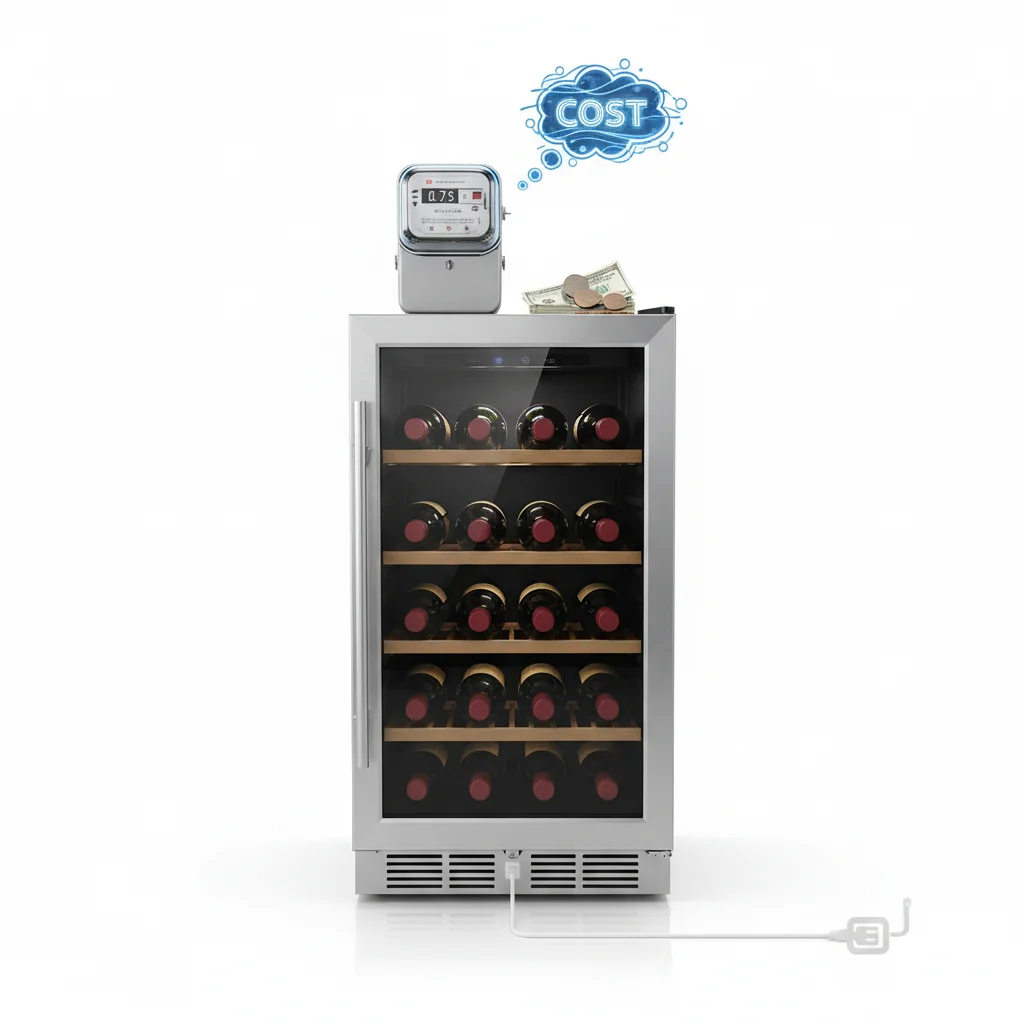
A typical 30-bottle wine cooler consumes between 0.5 to 1.5 kWh per day, resulting in an annual operating cost of approximately $30 to $100. This cost varies based on local electricity rates, the unit’s efficiency, and factors like size, insulation, and ambient room temperature. Understanding these elements helps manage household expenses and make informed decisions about wine storage.
Factors Affecting Wine Cooler Energy Use
Several key factors dictate how much electricity your wine cooler consumes. The size of the unit is a primary consideration; larger coolers with greater capacity naturally require more power to maintain their internal temperature. Insulation quality also plays a significant role; a well-insulated cooler will retain its temperature more effectively, reducing the compressor’s workload. Furthermore, the ambient temperature of the room where the cooler is located can impact energy usage. A cooler placed in a hot garage will work harder than one in a cool basement.
The type of cooling technology is another critical factor. Thermoelectric coolers, often found in smaller, less expensive units, are generally less energy-efficient than compressor-based models, especially in warmer environments. Compressor-based coolers, while sometimes having higher initial power draws, tend to be more efficient over continuous operation. Regular maintenance, such as cleaning condenser coils and ensuring door seals are intact, also contributes to optimal energy performance.
Calculating Your Wine Cooler’s Operating Cost
To estimate your wine cooler’s operating cost, you’ll need its wattage or daily kWh consumption and your local electricity rate. Most appliance specifications will list the annual kWh usage, making the calculation straightforward. If only wattage is provided, you can estimate daily consumption by multiplying the wattage by the number of hours the compressor runs (typically 8-12 hours per day, depending on usage and ambient temperature) and then dividing by 1000 to convert to kWh. For example, a 100-watt cooler running for 10 hours a day uses 1 kWh daily (100W * 10h / 1000 = 1 kWh).
Once you have the daily or annual kWh, multiply it by your electricity rate, usually expressed in cents per kWh. For instance, if your cooler uses 1 kWh per day and your electricity costs $0.15 per kWh, your daily cost is $0.15, or approximately $54.75 per year. Keep in mind that these are estimates, and actual costs may vary due to fluctuations in usage and external conditions.
Tips for Reducing Energy Consumption
|
Our Picks for the Best Wine Cooler in 2026
As an Amazon Associate I earn from qualifying purchases.
|
||
| Num | Product | Action |
|---|---|---|
| 1 | Cuisinart CWC-800CEN 8-Bottle Private Reserve Wine Cellar |

|
| 2 | Wine Enthusiast 32-Bottle Dual Zone MAX Compressor Wine Cooler – Freestanding Mini Fridge with Digital Touchscreen, LED Display, Split Storage for Red & White Wines, Matte Black Refrigerator Home Bar |
|
| 3 | BLACK+DECKER Wine Cooler 8 Bottle,Wine Fridge Thermoelectric with Mirrored Front,Freestanding Wine Cooler Refrigerator &LED Display,BD60326 |
|
| 4 | Ivation 12 Bottle Compressor Wine Cooler Refrigerator w/Lock, Large Freestanding Wine Cellar Fridge, 41f-64f Digital Temperature Control Glass Door Black |
|
| 5 | BLACK+DECKER Wine Fridge 12 Bottles, Thermoelectric Wine Cooler Refrigerator with Mirrored Front, Freestanding 12 Bottle Wine Fridge, BD60336 |
|
| 6 | Ivation 12 Bottle Red And White Wine Thermoelectric Wine Cooler/Chiller Counter Top Wine Cellar with Digital Temperature Display, Freestanding Refrigerator Smoked Glass Door Quiet Operation Fridge |
|
| 7 | Ivation Premium Stainless Steel 8 Bottle Horizontal Thermoelectric Wine Cooler/Chiller Counter Top Red & White Wine Cellar w/Digital Temperature, Freestanding Refrigerator Quiet Operation Fridge |
|
| 8 | Wine Enthusiast 6-Bottle Countertop Wine Cooler – Compact Mini Fridge for Kitchen or Bedroom with 3 Shelves, Energy-Efficient Cooling, Adjustable Digital Temperature Control |
|
| 9 | BLACK+DECKER BD60026 Wine Cellar with LED Display (8-Bottle Capacity) |
|
| 10 | Ivation Premium 6 Bottle Horizontal Thermoelectric Wine Cooler/Chiller Counter Top Red & White Wine Cellar w/Digital Temperature, Freestanding Refrigerator Quiet Operation Fridge |
|
Minimizing your wine cooler’s energy footprint can save you money and extend the life of your appliance. Here are some practical tips:
- Optimal Placement: Position your wine cooler in a cool, well-ventilated area away from direct sunlight or heat sources like ovens and radiators.
- Maintain Door Seals: Regularly check and clean door gaskets to ensure a tight seal. A compromised seal allows cold air to escape, forcing the compressor to work harder.
- Avoid Overfilling: While a full cooler is more efficient than an empty one, overfilling can obstruct airflow and reduce efficiency. Leave some space for proper circulation.
- Set Appropriate Temperature: While tempting to set the temperature very low, maintaining a slightly higher, but still safe, temperature (e.g., 55°F for mixed wines) can reduce energy use.
- Clean Condenser Coils: Dust and debris on the condenser coils can hinder heat dissipation, making the compressor work harder. Clean them every 6-12 months.
Energy-Efficient Wine Cooler Features to Look For
When purchasing a new wine cooler, consider models with features designed for energy efficiency. Look for units with an Energy Star rating, which indicates they meet strict energy efficiency guidelines set by the EPA. Dual-zone cooling, while offering temperature flexibility, can sometimes be less efficient if not properly managed, but many modern dual-zone units are designed with efficiency in mind.
Advanced insulation, often using thicker walls and better sealing materials, significantly contributes to lower energy consumption. Digital thermostats with precise temperature control also help prevent unnecessary cooling cycles. Some high-end models even incorporate vacation modes or smart features that optimize energy use based on your habits. Investing in a more efficient model upfront can lead to substantial savings over its lifespan.
The Impact of Usage Patterns
Your personal usage patterns also play a role in energy consumption. Frequent opening of the wine cooler door allows warm air to enter, requiring the unit to expend more energy to return to the set temperature. Try to minimize how often you open the door and retrieve multiple bottles at once if possible. Storing wines at their optimal, consistent temperature not only preserves their quality but also contributes to the cooler’s overall efficiency. A cooler that is constantly battling external temperature changes or frequent door openings will inevitably consume more power than one used judiciously.
Frequently Asked Questions
How much electricity does a typical 30-bottle wine cooler use daily?
A typical 30-bottle wine cooler uses between 0.5 to 1.5 kWh of electricity per day. This daily consumption can vary based on the unit's efficiency, its placement, and the ambient temperature of the room.
What factors most influence a wine cooler's energy usage?
The most influential factors are the cooler's size, insulation quality, and the ambient room temperature. Larger units, poor insulation, and warmer environments all increase energy consumption. The type of cooling technology, such as compressor-based versus thermoelectric, also plays a significant role.
How can I calculate my wine cooler's annual operating cost?
To calculate the annual operating cost, multiply the cooler's daily or annual kWh consumption by your local electricity rate. For example, if a cooler uses 1 kWh per day and electricity costs $0.15 per kWh, the annual cost is approximately $54.75.
What are the best tips for reducing my wine cooler's energy consumption?
To reduce energy consumption, place your cooler in a cool, well-ventilated area, maintain tight door seals, avoid overfilling, set an appropriate temperature (e.g., 55u00b0F), and clean condenser coils every 6-12 months. Minimizing door openings also helps maintain efficiency.
What energy-efficient features should I look for in a new wine cooler?
When buying a new wine cooler, look for an Energy Star rating, advanced insulation, and digital thermostats for precise temperature control. Some models also offer vacation modes or smart features to optimize energy use, leading to long-term savings.
Reduce Wine Cooler Energy Consumption
Minimize your wine cooler's energy footprint to save money and extend its lifespan with these practical steps.
Position your wine cooler in a cool, well-ventilated area. Keep it away from direct sunlight or heat sources like ovens and radiators to prevent the compressor from working harder.
Regularly check and clean the door gaskets to ensure a tight seal. A compromised seal allows cold air to escape, forcing the compressor to expend more energy to maintain the set temperature.
While a full cooler is generally more efficient than an empty one, overfilling can obstruct proper airflow. Leave some space for air circulation to maintain optimal efficiency.
Maintain a slightly higher, but still safe, temperature for your wines, such as 55u00b0F for mixed wines. Setting the temperature unnecessarily low increases energy usage.
Dust and debris on the condenser coils can hinder heat dissipation, making the compressor work harder. Clean them every 6-12 months to ensure optimal energy performance.
Get our weekly buyer guide
Practical specs, not advice. Unsubscribe anytime.

I was really worried about adding another appliance and seeing my electricity bill skyrocket. This breakdown on annual operating costs, especially the $30 to $100 range, was super helpful. It made me feel a lot better about finally getting that 30-bottle cooler I’ve been eyeing. Now I can keep my reds and whites at the perfect temp without stressing over hidden costs.
While the info on kWh per day was useful, I wish there was a bit more detail on specific brands or models that are known for being energy efficient. It’s hard to translate the general advice into a concrete purchase decision without some examples. My current cooler is in a warmer part of my house, so the ambient temperature factor is definitely something I need to consider more.
This was exactly what I needed! I’ve been trying to figure out if a larger unit would be too expensive to run, and understanding that larger coolers naturally require more power makes perfect sense. It helped me decide on a smaller, more efficient model for my space. Knowing the factors affecting energy use really helps in making an informed choice.
Good info here. I always wondered about the actual energy use. My old unit was definitely a power hog, and I suspect it was due to poor insulation. The point about how insulation quality impacts the compressor’s workload really resonated with me. I’m upgrading soon and will definitely pay more attention to that spec now.