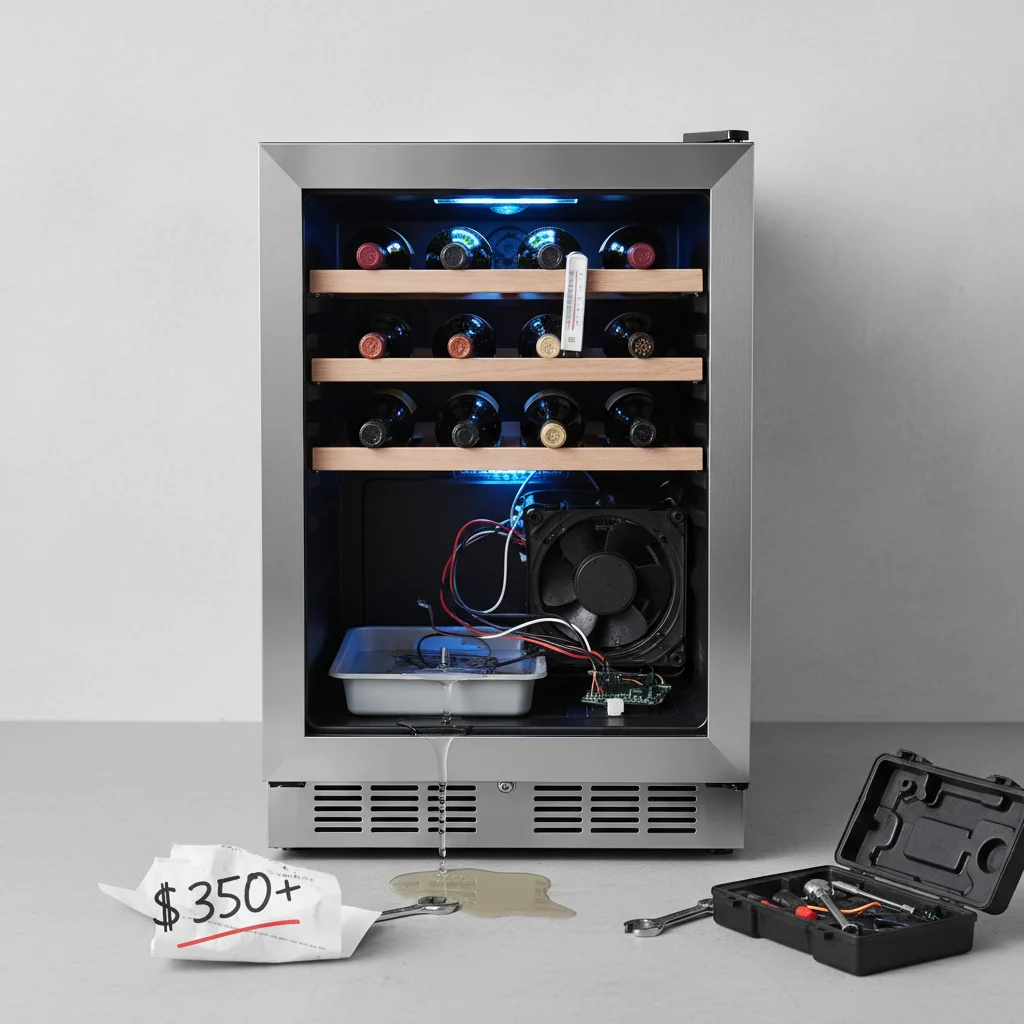
Homeowners can expect to pay an average of $150 to $400 for professional wine cooler repairs in 2026, though costs vary based on the specific issue, brand, and geographic location. Minor problems like a faulty thermostat or a door seal replacement typically fall on the lower end, while complex issues such as compressor failure or refrigerant leaks can push costs higher, sometimes nearing the price of a new entry-level unit.
Common Wine Cooler Problems and Their Repair Costs
Several common issues can affect wine coolers, each with varying repair complexity and cost. For instance, a malfunctioning thermostat, which causes incorrect temperatures, typically costs between $100 and $250 to replace. This usually involves a simple part swap and recalibration. Another frequent problem is a worn-out door gasket, leading to air leaks and inefficient cooling. Replacing a door seal generally ranges from $75 to $175, depending on the cooler’s model and the availability of the specific seal. For expert home wine reviews on this site.
More serious issues involve the cooling system itself. If your wine cooler isn’t cooling, it could be due to a faulty fan motor, which might cost $150-$300 to replace, or a more expensive compressor issue. Compressor replacements are among the most costly repairs, often ranging from $300 to $600, as they require specialized labor and a significant component cost. Refrigerant leaks, while less common in sealed systems, also require professional attention and can cost $200-$500, including leak detection and recharging.
Factors Influencing Repair Expenses
Several factors significantly determine the final repair bill for your wine cooler. The brand and model of your appliance greatly impact parts availability and cost; premium brands often have more expensive proprietary components. The age of the wine cooler is another consideration; older units might have parts that are harder to source, potentially increasing labor time and cost. Furthermore, the type of cooling system—thermoelectric versus compressor-based—affects repair complexity, with compressor models generally being more intricate to fix.
Your geographic location also influences labor rates. Repair services in metropolitan areas typically charge more per hour than those in rural regions. Always inquire about diagnostic fees, as many technicians charge a flat rate for assessing the problem, which may or may not be waived if you proceed with the repair. It’s advisable to get at least two quotes for significant repairs to ensure you’re getting a fair price.
DIY vs. Professional Repair: When to Call an Expert
|
Our Picks for the Best Wine Cooler in 2026
As an Amazon Associate I earn from qualifying purchases.
|
||
| Num | Product | Action |
|---|---|---|
| 1 | BLACK+DECKER Wine Fridge 12 Bottles, Thermoelectric Wine Cooler Refrigerator with Mirrored Front, Freestanding 12 Bottle Wine Fridge, BD60336 |

|
| 2 | BLACK+DECKER Wine Cooler 8 Bottle,Wine Fridge Thermoelectric with Mirrored Front,Freestanding Wine Cooler Refrigerator &LED Display,BD60326 |
|
| 3 | Ivation Premium Stainless Steel 8 Bottle Horizontal Thermoelectric Wine Cooler/Chiller Counter Top Red & White Wine Cellar w/Digital Temperature, Freestanding Refrigerator Quiet Operation Fridge |
|
| 4 | Wine Enthusiast 6-Bottle Countertop Wine Cooler – Compact Mini Fridge for Kitchen or Bedroom with 3 Shelves, Energy-Efficient Cooling, Adjustable Digital Temperature Control |
|
| 5 | BLACK+DECKER BD60026 Wine Cellar with LED Display (8-Bottle Capacity) |
|
| 6 | Ivation 12 Bottle Red And White Wine Thermoelectric Wine Cooler/Chiller Counter Top Wine Cellar with Digital Temperature Display, Freestanding Refrigerator Smoked Glass Door Quiet Operation Fridge |
|
| 7 | Cuisinart CWC-800CEN 8-Bottle Private Reserve Wine Cellar |
|
| 8 | Ivation Premium 6 Bottle Horizontal Thermoelectric Wine Cooler/Chiller Counter Top Red & White Wine Cellar w/Digital Temperature, Freestanding Refrigerator Quiet Operation Fridge |
|
| 9 | Ivation 12 Bottle Compressor Wine Cooler Refrigerator w/Lock, Large Freestanding Wine Cellar Fridge, 41f-64f Digital Temperature Control Glass Door Black |
|
| 10 | Wine Enthusiast 32-Bottle Dual Zone MAX Compressor Wine Cooler – Freestanding Mini Fridge with Digital Touchscreen, LED Display, Split Storage for Red & White Wines, Matte Black Refrigerator Home Bar |
|
While some minor wine cooler issues can be tackled by a handy homeowner, many repairs require professional expertise. Simple fixes like cleaning condenser coils, replacing an LED light, or tightening loose connections might be suitable for a DIY approach. However, anything involving refrigerant, electrical components beyond a simple plug, or the sealed cooling system should be left to certified technicians. Attempting complex repairs without the proper tools or knowledge can not only void your warranty but also lead to further damage or safety hazards.
Consider the cost-effectiveness of a repair versus replacement. If the repair cost exceeds 50% of the price of a new, comparable wine cooler, especially for an older unit, it might be more economical to invest in a new appliance. Modern wine coolers often come with improved energy efficiency and updated features, offering better long-term value.
Tips for Reducing Future Repair Costs
- Regular Cleaning: Keep condenser coils clean to ensure efficient operation and prevent overheating.
- Proper Ventilation: Ensure your wine cooler has adequate space around it for air circulation, especially for freestanding models.
- Check Door Seals: Periodically inspect door gaskets for cracks or gaps and replace them if necessary to maintain temperature.
- Avoid Overloading: Do not overfill your wine cooler, as this can strain the cooling system and lead to premature wear.
- Professional Maintenance: Consider an annual check-up by a qualified technician to catch potential issues before they become major problems.
By following these preventative measures, you can extend the lifespan of your wine cooler and potentially reduce the frequency and cost of future repairs. When a repair is necessary, being informed about potential costs and knowing when to call a professional will help you make the best decision for your wine collection.
Frequently Asked Questions
What is the average cost to repair a wine cooler?
The average cost for professional wine cooler repair ranges from $150 to $400. This estimate can fluctuate based on the specific problem, the brand of the cooler, and your geographical location.
How much does it cost to replace a wine cooler compressor?
Replacing a wine cooler compressor is one of the most expensive repairs, typically costing between $300 and $600. This includes specialized labor and the cost of the component itself.
When should I consider replacing my wine cooler instead of repairing it?
You should consider replacing your wine cooler if the repair cost exceeds 50% of the price of a new, comparable unit, especially for older models. New appliances often offer improved energy efficiency and updated features.
What are common issues that increase wine cooler repair expenses?
Factors that increase wine cooler repair expenses include premium brands with expensive proprietary components, older units with hard-to-source parts, and complex compressor-based cooling systems. Geographic location also impacts labor rates.
Can I perform DIY repairs on my wine cooler to save money?
Minor issues like cleaning condenser coils, replacing an LED light, or tightening loose connections can be DIY. However, any repairs involving refrigerant, complex electrical components, or the sealed cooling system should be handled by certified technicians to avoid further damage or safety hazards.
Reduce Future Wine Cooler Repair Costs
Follow these steps to extend the lifespan of your wine cooler and minimize the need for costly repairs.
Keep the condenser coils clean to ensure efficient operation and prevent the cooling system from overheating. This simple maintenance task can significantly improve your cooler's performance.
Provide adequate space around your wine cooler for air circulation, especially for freestanding models. Good ventilation prevents the unit from overworking and extends component life.
Regularly check door gaskets for any cracks or gaps that could lead to air leaks. Replacing worn seals promptly helps maintain consistent internal temperatures and energy efficiency.
Do not overfill your wine cooler beyond its recommended capacity. Overloading can strain the cooling system, leading to premature wear and potential malfunctions.
Consider an annual check-up by a qualified technician. This can help identify and address potential issues before they escalate into major, expensive problems.
Get our weekly buyer guide
Practical specs, not advice. Unsubscribe anytime.

My wine cooler had a really annoying refrigerant leak, and I knew that was a big one. The repair cost was definitely higher than I expected, almost pushing the price of a new entry-level unit. It works fine now, but I’m a bit bummed about how much I had to shell out. Wish I’d caught it sooner.
When my compressor went out, I was bracing myself for the worst. I’d heard those repairs could be super expensive. Luckily, I found a good technician, and while it wasn’t cheap, it was still less than buying a brand new high-end cooler. The average $150 to $400 range for repairs gave me a good benchmark, and mine fell within that for the compressor work.
I had a problem with my door seal and was getting really frustrated with the condensation inside. I was quoted around $180 for a replacement, which was right in line with the $120-$280 range I saw for door gasket issues. It was a quick fix, and now my wines are chilling perfectly again. Good to know what to expect for these common problems.
I was so worried when my wine cooler started acting up, especially with the temperature fluctuating. I thought it was going to cost a fortune. After reading up on it, I realized it was likely just a faulty thermostat. The repair ended up being on the lower end of the $100-$250 range mentioned, which was a huge relief. Definitely worth fixing instead of buying a whole new unit.