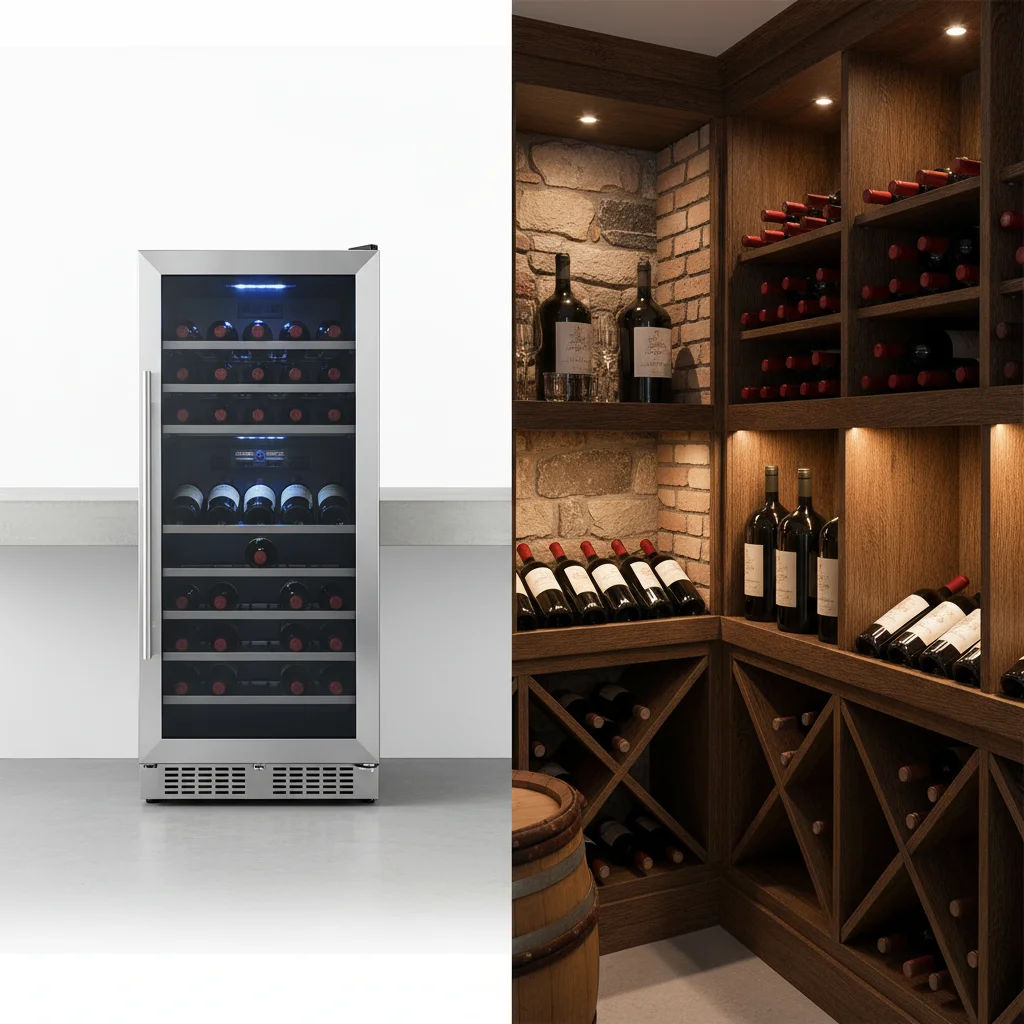
Deciding between a wine cooler and a dedicated wine cellar hinges on several factors, primarily your collection size, budget, and available space. For most home enthusiasts with up to 200 bottles, a high-quality wine cooler offers a more practical and cost-effective solution, providing precise temperature and humidity control without the extensive construction and maintenance of a full cellar.
Understanding Wine Coolers: Convenience and Control
Wine coolers, also known as wine refrigerators, are self-contained units designed to store wine at optimal conditions. They come in various sizes, from small countertop models holding a dozen bottles to larger units accommodating over 150. Key advantages include their portability, ease of installation, and relatively lower upfront cost. Modern wine coolers often feature dual-zone temperature control, allowing you to store red and white wines at their ideal serving or aging temperatures simultaneously. They also typically maintain a stable humidity level, crucial for preventing corks from drying out.
While convenient, wine coolers have limitations. Their capacity is finite, and they may not offer the same long-term aging potential as a properly constructed cellar for very rare or investment-grade wines. However, for everyday drinking and aging wines for up to 10-15 years, a good wine cooler is perfectly adequate. Consider models with vibration-dampening systems to protect your wine from harmful disturbances.
Exploring Wine Cellars: The Ultimate Long-Term Storage
A wine cellar, whether a custom-built room or a converted basement space, represents the pinnacle of wine storage. Cellars offer superior capacity, often housing hundreds or even thousands of bottles. They provide a stable, dark, and vibration-free environment, ideal for the long-term aging of fine wines over decades. The consistent temperature and high humidity levels in a well-designed cellar are unmatched for preserving wine quality and ensuring proper cork integrity.
However, the commitment to a wine cellar is substantial. It involves significant construction costs, specialized insulation, a dedicated cooling and humidification system, and ongoing energy expenses. Maintenance can also be more complex, requiring regular checks of the environmental controls. For serious collectors with a large, valuable collection intended for very long-term aging, a wine cellar is an investment that pays dividends in wine preservation.
Key Differences in Cost and Installation
|
Our Picks for the Best Wine Cooler in 2026
As an Amazon Associate I earn from qualifying purchases.
|
||
| Num | Product | Action |
|---|---|---|
| 1 | Wine Enthusiast 6-Bottle Countertop Wine Cooler – Compact Mini Fridge for Kitchen or Bedroom with 3 Shelves, Energy-Efficient Cooling, Adjustable Digital Temperature Control |

|
| 2 | Wine Enthusiast 32-Bottle Dual Zone MAX Compressor Wine Cooler – Freestanding Mini Fridge with Digital Touchscreen, LED Display, Split Storage for Red & White Wines, Matte Black Refrigerator Home Bar |
|
| 3 | BLACK+DECKER BD60026 Wine Cellar with LED Display (8-Bottle Capacity) |
|
| 4 | Ivation 12 Bottle Compressor Wine Cooler Refrigerator w/Lock, Large Freestanding Wine Cellar Fridge, 41f-64f Digital Temperature Control Glass Door Black |
|
| 5 | BLACK+DECKER Wine Fridge 12 Bottles, Thermoelectric Wine Cooler Refrigerator with Mirrored Front, Freestanding 12 Bottle Wine Fridge, BD60336 |
|
| 6 | Ivation Premium 6 Bottle Horizontal Thermoelectric Wine Cooler/Chiller Counter Top Red & White Wine Cellar w/Digital Temperature, Freestanding Refrigerator Quiet Operation Fridge |
|
| 7 | BLACK+DECKER Wine Cooler 8 Bottle,Wine Fridge Thermoelectric with Mirrored Front,Freestanding Wine Cooler Refrigerator &LED Display,BD60326 |
|
| 8 | Cuisinart CWC-800CEN 8-Bottle Private Reserve Wine Cellar |
|
| 9 | Ivation 12 Bottle Red And White Wine Thermoelectric Wine Cooler/Chiller Counter Top Wine Cellar with Digital Temperature Display, Freestanding Refrigerator Smoked Glass Door Quiet Operation Fridge |
|
| 10 | Ivation Premium Stainless Steel 8 Bottle Horizontal Thermoelectric Wine Cooler/Chiller Counter Top Red & White Wine Cellar w/Digital Temperature, Freestanding Refrigerator Quiet Operation Fridge |
|
The cost difference between a wine cooler and a wine cellar is significant. A quality wine cooler can range from $300 for a small unit to $3,000 for a large, feature-rich model. Installation is typically plug-and-play, requiring only an electrical outlet and adequate ventilation.In contrast, building a custom wine cellar can cost anywhere from $10,000 to over $100,000, depending on its size, materials, and the complexity of the climate control system. This doesn’t include the cost of professional installation and potential architectural modifications to your home.
Capacity and Collection Size Considerations
Your current and projected wine collection size is a primary determinant. If you typically keep 50-150 bottles on hand, a large capacity wine cooler will likely meet your needs. These units are designed to maximize space efficiency while maintaining optimal conditions. For collections exceeding 200 bottles, especially if you plan to expand significantly, a wine cellar becomes a more practical solution. It offers the flexibility to grow your collection without needing to purchase multiple smaller units.
Maintenance and Energy Consumption
Wine coolers generally require minimal maintenance, primarily consisting of occasional cleaning of the interior and exterior, and ensuring proper airflow around the unit. Their energy consumption is comparable to a standard refrigerator, varying by size and efficiency rating. Wine cellars, on the other hand, demand more rigorous maintenance of their cooling and humidification systems. They also typically consume more energy due to the larger volume of air being conditioned and the continuous operation required to maintain precise environmental controls.
Making the Right Choice for Your Home
Ultimately, the choice between a wine cooler and a wine cellar depends on your specific needs and priorities. Consider these factors:
- Collection Size: Small to medium collections (under 200 bottles) favor coolers.
- Budget: Coolers are significantly more affordable upfront and to operate.
- Space Availability: Coolers are compact; cellars require dedicated room.
- Aging Horizon: Coolers are great for short to medium-term aging; cellars for long-term.
- Home Value: A custom cellar can add significant value to a luxury home.
For most home wine enthusiasts, a well-chosen wine cooler provides an excellent balance of performance, convenience, and cost-effectiveness. For serious collectors with a substantial investment in fine wines and the resources to match, a dedicated wine cellar offers the ultimate in long-term preservation.
Get our weekly buyer guide
Practical specs, not advice. Unsubscribe anytime.
