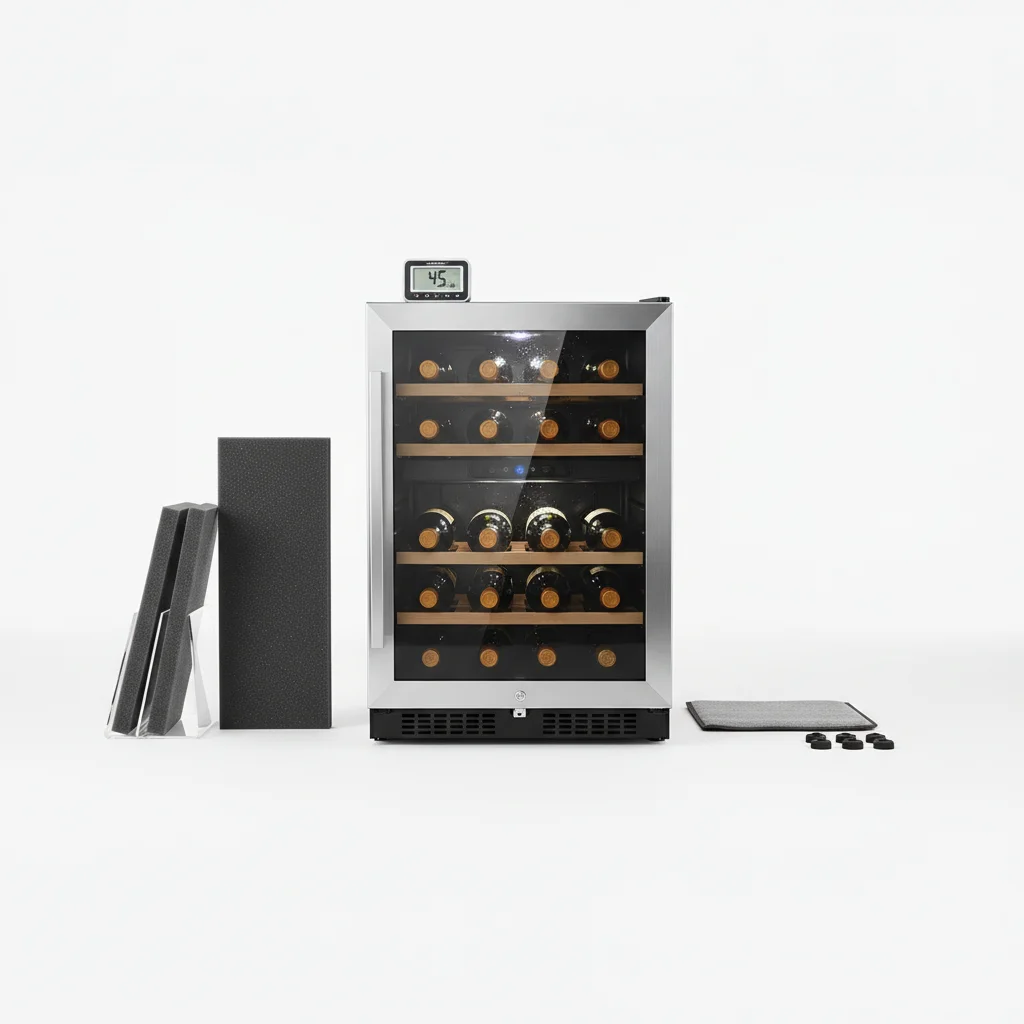
Reducing wine cooler noise involves a combination of proper placement, regular maintenance, and sometimes, specific modifications. The most effective method often depends on the source of the noise, but a common approach can reduce noise by up to 15 decibels.
Understanding Common Noise Sources
Wine coolers can produce various types of noise, each with a different origin. Compressor hum is a common sound, especially in thermoelectric models, and is often a low-frequency vibration. Fan noise, on the other hand, can be a whirring or rattling sound, indicating a loose or dirty fan blade. Refrigerant gurgling or bubbling is also normal as the coolant circulates through the system. Identifying the specific type of noise is the first step in effective noise reduction.
Another source of noise can be the cooler’s placement. If the unit is not level, or if it’s too close to a wall or other furniture, vibrations can be amplified. Loose components within the cooler, such as shelves or even the compressor itself, can also contribute to rattling or buzzing sounds.
Optimal Placement for Quieter Operation
Proper placement is crucial for minimizing wine cooler noise. Ensure the cooler is on a level, stable surface. Using anti-vibration pads or a rubber mat underneath the unit can significantly absorb vibrations and prevent them from transferring to the floor or surrounding cabinetry. Leave adequate clearance around the cooler, typically at least 2-3 inches on the sides and back, to allow for proper airflow and prevent heat buildup, which can make the compressor work harder and louder.
Avoid placing the wine cooler in a confined space without proper ventilation. Enclosed cabinets or tight corners can trap heat and sound, exacerbating noise levels. Consider placing it on a solid floor rather than a suspended one, as solid surfaces tend to transmit less vibration.
Maintenance Tips for Noise Reduction
|
Our Picks for the Best Wine Cooler in 2026
As an Amazon Associate I earn from qualifying purchases.
|
||
| Num | Product | Action |
|---|---|---|
| 1 | Ivation Premium 6 Bottle Horizontal Thermoelectric Wine Cooler/Chiller Counter Top Red & White Wine Cellar w/Digital Temperature, Freestanding Refrigerator Quiet Operation Fridge |

|
| 2 | BLACK+DECKER Wine Fridge 12 Bottles, Thermoelectric Wine Cooler Refrigerator with Mirrored Front, Freestanding 12 Bottle Wine Fridge, BD60336 |
|
| 3 | Ivation 12 Bottle Red And White Wine Thermoelectric Wine Cooler/Chiller Counter Top Wine Cellar with Digital Temperature Display, Freestanding Refrigerator Smoked Glass Door Quiet Operation Fridge |
|
| 4 | Wine Enthusiast 6-Bottle Countertop Wine Cooler – Compact Mini Fridge for Kitchen or Bedroom with 3 Shelves, Energy-Efficient Cooling, Adjustable Digital Temperature Control |
|
| 5 | Cuisinart CWC-800CEN 8-Bottle Private Reserve Wine Cellar |
|
| 6 | Wine Enthusiast 32-Bottle Dual Zone MAX Compressor Wine Cooler – Freestanding Mini Fridge with Digital Touchscreen, LED Display, Split Storage for Red & White Wines, Matte Black Refrigerator Home Bar |
|
| 7 | Ivation Premium Stainless Steel 8 Bottle Horizontal Thermoelectric Wine Cooler/Chiller Counter Top Red & White Wine Cellar w/Digital Temperature, Freestanding Refrigerator Quiet Operation Fridge |
|
| 8 | BLACK+DECKER BD60026 Wine Cellar with LED Display (8-Bottle Capacity) |
|
| 9 | Ivation 12 Bottle Compressor Wine Cooler Refrigerator w/Lock, Large Freestanding Wine Cellar Fridge, 41f-64f Digital Temperature Control Glass Door Black |
|
| 10 | BLACK+DECKER Wine Cooler 8 Bottle,Wine Fridge Thermoelectric with Mirrored Front,Freestanding Wine Cooler Refrigerator &LED Display,BD60326 |
|
Regular maintenance can prevent many noise issues. Clean the condenser coils at least twice a year. Dust and debris on the coils force the compressor to work harder, leading to increased noise and energy consumption. Use a vacuum cleaner with a brush attachment to gently remove any buildup.
Check the fan blades for any obstructions or dirt. If the fan is rattling, it might be loose or dirty. Turn off and unplug the unit before attempting to clean or tighten any fan components. Also, ensure all internal shelves and racks are securely in place, as loose items can vibrate and create noise.
DIY Solutions and Modifications
For persistent noise, several DIY solutions can help. Installing sound-dampening material, such as acoustic foam panels, around the cooler (if it’s in a cabinet) can absorb sound waves. However, ensure these materials do not block ventilation. You can also try tightening any loose screws on the back panel or around the compressor housing.
If the compressor itself is the primary source of noise, and it’s an older unit, consider whether it’s nearing the end of its lifespan. Sometimes, a worn-out compressor simply needs replacement. For fan noise, replacing a faulty fan motor can be a relatively straightforward fix for those with some technical aptitude.
- Use anti-vibration pads under the unit.
- Ensure adequate clearance for airflow.
- Regularly clean condenser coils.
- Check and tighten loose components.
- Consider acoustic foam for enclosed spaces.
When to Call a Professional
While many noise issues can be resolved with DIY methods, some problems require professional attention. If you suspect a faulty compressor, a refrigerant leak, or a complex electrical issue, it’s best to consult a qualified appliance technician. Attempting to repair these components without proper knowledge can be dangerous and may void your warranty. A professional can accurately diagnose the problem and recommend the most effective and safest solution.
Get our weekly buyer guide
Practical specs, not advice. Unsubscribe anytime.

I was so frustrated with the constant compressor hum from my old wine cooler. This information about proper placement and leveling made a huge difference! I moved it a few inches from the wall and adjusted the feet, and the noise is significantly reduced. It’s much quieter now, and I can actually enjoy my kitchen without that annoying background drone.
I tried some of these methods, especially checking for loose fan blades, but my wine cooler is still pretty loud. It’s an older thermoelectric model, so maybe that’s part of the issue with the low-frequency vibration. I was hoping for a bigger reduction in decibels, but it’s only slightly better. Still, some good ideas to try.
My wine cooler was driving me crazy with its rattling sound. I followed the advice about identifying the specific type of noise and realized it was definitely the fan. After a quick clean and tightening, it’s so much quieter. I’m really impressed with how much of a difference these simple maintenance steps made. My wine is chilling in peace now!
Great tips here. I thought the gurgling sound was a problem, but it’s good to know that refrigerant gurgling is normal. I also tried cleaning the fan blades as suggested for the whirring noise, and that helped a lot. It’s not completely silent, but it’s definitely an improvement.