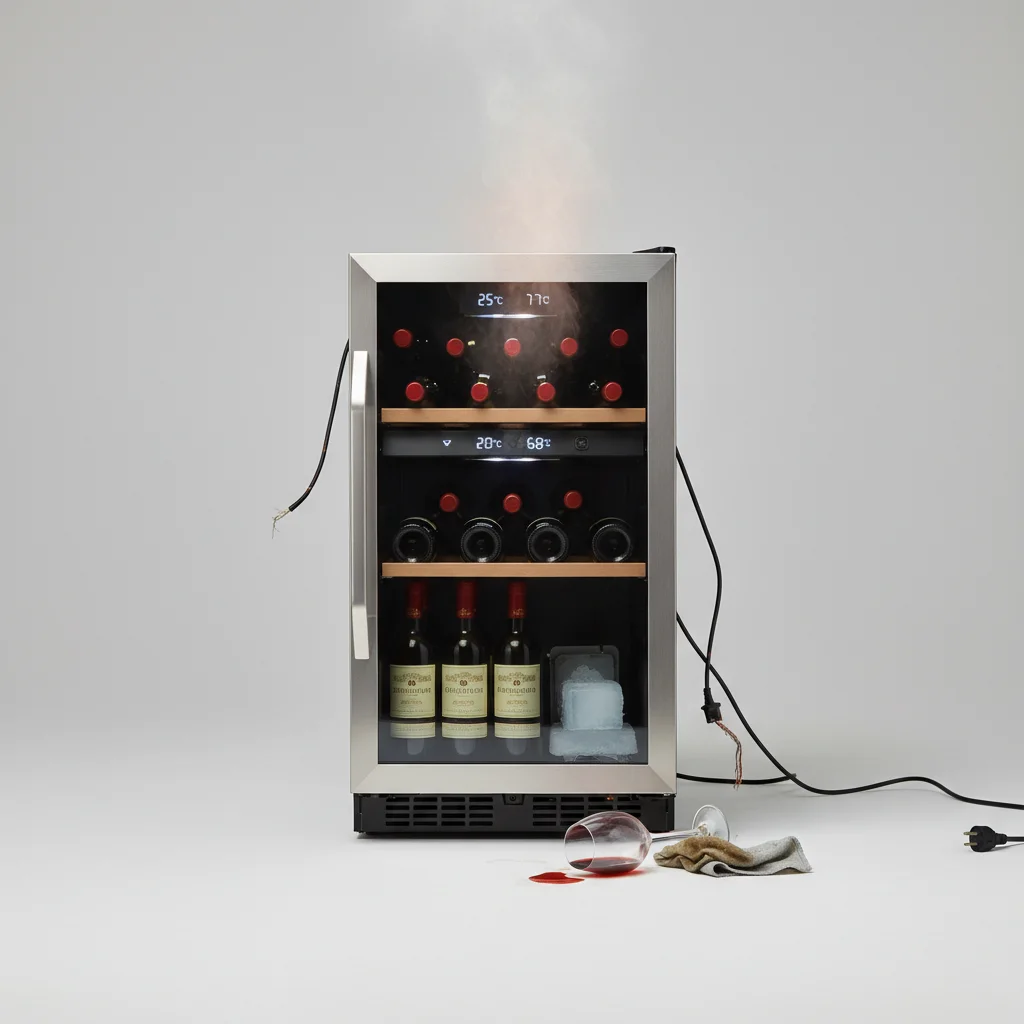
When a wine cooler isn’t cooling, the most common causes are a faulty thermostat, dirty condenser coils, or a malfunctioning fan motor. Addressing these issues promptly can prevent wine spoilage and extend the appliance’s lifespan, as a wine cooler operates on a refrigeration cycle similar to a standard refrigerator, circulating refrigerant to absorb and release heat.
Understanding the Cooling System Basics
A wine cooler operates on a refrigeration cycle similar to a standard refrigerator. It uses a compressor to circulate refrigerant, which absorbs heat from inside the unit and releases it outside. Key components include the compressor, condenser coils, evaporator coils, and a fan. Any disruption in this cycle can lead to a lack of cooling. Regular maintenance, such as cleaning the condenser coils, is crucial for optimal performance.
Common Culprits Behind Cooling Failure
Several factors can contribute to a wine cooler failing to cool. One frequent issue is a dirty condenser coil. Over time, dust and debris accumulate on these coils, hindering their ability to dissipate heat effectively. This forces the compressor to work harder, leading to reduced cooling efficiency and potential burnout. Another common problem is a faulty thermostat, which may not be accurately reading the internal temperature or sending the correct signals to the compressor.
Troubleshooting Thermostat and Sensor Issues
|
Our Picks for the Best Wine Cooler in 2026
As an Amazon Associate I earn from qualifying purchases.
|
||
| Num | Product | Action |
|---|---|---|
| 1 | Cuisinart CWC-800CEN 8-Bottle Private Reserve Wine Cellar |

|
| 2 | Wine Enthusiast 6-Bottle Countertop Wine Cooler – Compact Mini Fridge for Kitchen or Bedroom with 3 Shelves, Energy-Efficient Cooling, Adjustable Digital Temperature Control |
|
| 3 | Wine Enthusiast 32-Bottle Dual Zone MAX Compressor Wine Cooler – Freestanding Mini Fridge with Digital Touchscreen, LED Display, Split Storage for Red & White Wines, Matte Black Refrigerator Home Bar |
|
| 4 | Ivation 12 Bottle Compressor Wine Cooler Refrigerator w/Lock, Large Freestanding Wine Cellar Fridge, 41f-64f Digital Temperature Control Glass Door Black |
|
| 5 | Ivation Premium 6 Bottle Horizontal Thermoelectric Wine Cooler/Chiller Counter Top Red & White Wine Cellar w/Digital Temperature, Freestanding Refrigerator Quiet Operation Fridge |
|
| 6 | BLACK+DECKER Wine Cooler 8 Bottle,Wine Fridge Thermoelectric with Mirrored Front,Freestanding Wine Cooler Refrigerator &LED Display,BD60326 |
|
| 7 | Ivation Premium Stainless Steel 8 Bottle Horizontal Thermoelectric Wine Cooler/Chiller Counter Top Red & White Wine Cellar w/Digital Temperature, Freestanding Refrigerator Quiet Operation Fridge |
|
| 8 | BLACK+DECKER Wine Fridge 12 Bottles, Thermoelectric Wine Cooler Refrigerator with Mirrored Front, Freestanding 12 Bottle Wine Fridge, BD60336 |
|
| 9 | Ivation 12 Bottle Red And White Wine Thermoelectric Wine Cooler/Chiller Counter Top Wine Cellar with Digital Temperature Display, Freestanding Refrigerator Smoked Glass Door Quiet Operation Fridge |
|
| 10 | BLACK+DECKER BD60026 Wine Cellar with LED Display (8-Bottle Capacity) |
|
If your wine cooler’s thermostat is malfunctioning, it might be incorrectly sensing the internal temperature, leading to the compressor not engaging or running excessively. You can often test the thermostat’s accuracy with an external thermometer. If there’s a significant discrepancy, the thermostat likely needs replacement. Similarly, a faulty temperature sensor can send incorrect readings to the control board, disrupting the cooling cycle. These components are relatively inexpensive to replace, but professional diagnosis is recommended if you’re unsure.
Fan Motor and Compressor Problems
The fan motor plays a vital role in circulating air over the condenser and evaporator coils. If the condenser fan motor fails, heat cannot be properly dissipated, causing the unit to overheat and lose cooling capacity. If the evaporator fan motor fails, cold air won’t circulate inside the cooler. A more serious issue is a failing compressor, which is the heart of the refrigeration system. Symptoms of a failing compressor include unusual noises, the unit running constantly without cooling, or not running at all. Compressor replacement is often costly and may warrant considering a new unit, especially for older models.
Preventative Maintenance Tips
To avoid your wine cooler from failing to cool, implement a routine maintenance schedule. This includes:
- Cleaning the condenser coils every 6-12 months.
- Ensuring proper ventilation around the unit.
- Checking door seals for any leaks or gaps.
- Monitoring the internal temperature regularly with an external thermometer.
- Avoiding overloading the cooler, which can restrict airflow.
By following these simple steps, you can significantly reduce the likelihood of cooling issues and ensure your wines are stored at their ideal temperature.
Frequently Asked Questions
What are the most common reasons a wine cooler stops cooling?
The most common reasons a wine cooler stops cooling are a faulty thermostat, dirty condenser coils, or a malfunctioning fan motor. These components are critical for maintaining the refrigeration cycle and proper temperature regulation within the unit.
How often should I clean the condenser coils on my wine cooler?
You should clean the condenser coils on your wine cooler every 6 to 12 months. Regular cleaning prevents dust and debris buildup, which can hinder heat dissipation and force the compressor to work harder, reducing efficiency.
Can a faulty thermostat cause my wine cooler to stop working?
Yes, a faulty thermostat can cause your wine cooler to stop working correctly. If the thermostat inaccurately senses the internal temperature, it may not signal the compressor to engage, leading to a lack of cooling or excessive running.
What are the signs of a failing compressor in a wine cooler?
Signs of a failing compressor in a wine cooler include unusual noises, the unit running constantly without cooling, or not running at all. The compressor is the core of the refrigeration system, and its failure often leads to significant repair costs.
Is it worth replacing a wine cooler compressor?
Replacing a wine cooler compressor is often costly and may warrant considering a new unit, especially for older models. The decision depends on the age of the cooler, the cost of the repair versus a new unit, and the overall condition of the appliance.
Prevent Wine Cooler Cooling Issues
Follow these steps to maintain your wine cooler and prevent common cooling problems, ensuring your wines are stored at their ideal temperature.
Clean the condenser coils every 6-12 months to prevent dust and debris buildup. This ensures efficient heat dissipation and reduces strain on the compressor, maintaining optimal cooling performance.
Verify that your wine cooler has adequate space around it for proper ventilation. Restricted airflow can cause the unit to overheat, leading to reduced cooling efficiency and potential component failure.
Regularly inspect the door seals for any leaks or gaps. Damaged seals allow warm air to enter the cooler, forcing the unit to work harder to maintain temperature and potentially causing cooling issues.
Use an external thermometer to regularly monitor the internal temperature of your wine cooler. This helps detect any discrepancies early, indicating potential thermostat or sensor issues before they become major problems.
Do not overload your wine cooler with too many bottles. Overloading can restrict internal airflow, preventing cold air from circulating effectively and leading to inconsistent temperatures and cooling problems.
Get our weekly buyer guide
Practical specs, not advice. Unsubscribe anytime.

My wine cooler has been acting up, and I suspected it might be the thermostat. I tried the troubleshooting steps, but I’m still not entirely sure if that’s the problem or something else. It’s a bit more complicated than I expected to diagnose myself, so I might need to call a professional after all. Still, it gave me a good starting point.
This was incredibly helpful! My wine cooler suddenly wasn’t keeping temperature, and I was worried about my collection. I checked the fan motor as suggested, and sure enough, it was making a weird noise and barely spinning. Replaced it, and now my wines are chilling perfectly again. Saved me a ton of money on a service call.
Fantastic advice! I’ve had my wine cooler for years, and it’s always worked flawlessly until recently. I learned so much about the refrigeration cycle and how it works. I found that the compressor was running constantly but not cooling, which pointed me to a potential refrigerant leak. Now I know what to tell the repair technician.
I was so frustrated when my wine cooler stopped cooling, and I thought I’d have to buy a whole new unit. Turns out, the issue was just dirty condenser coils! After a good cleaning, it’s back to perfect working order. It’s amazing how a simple maintenance task can make such a big difference.