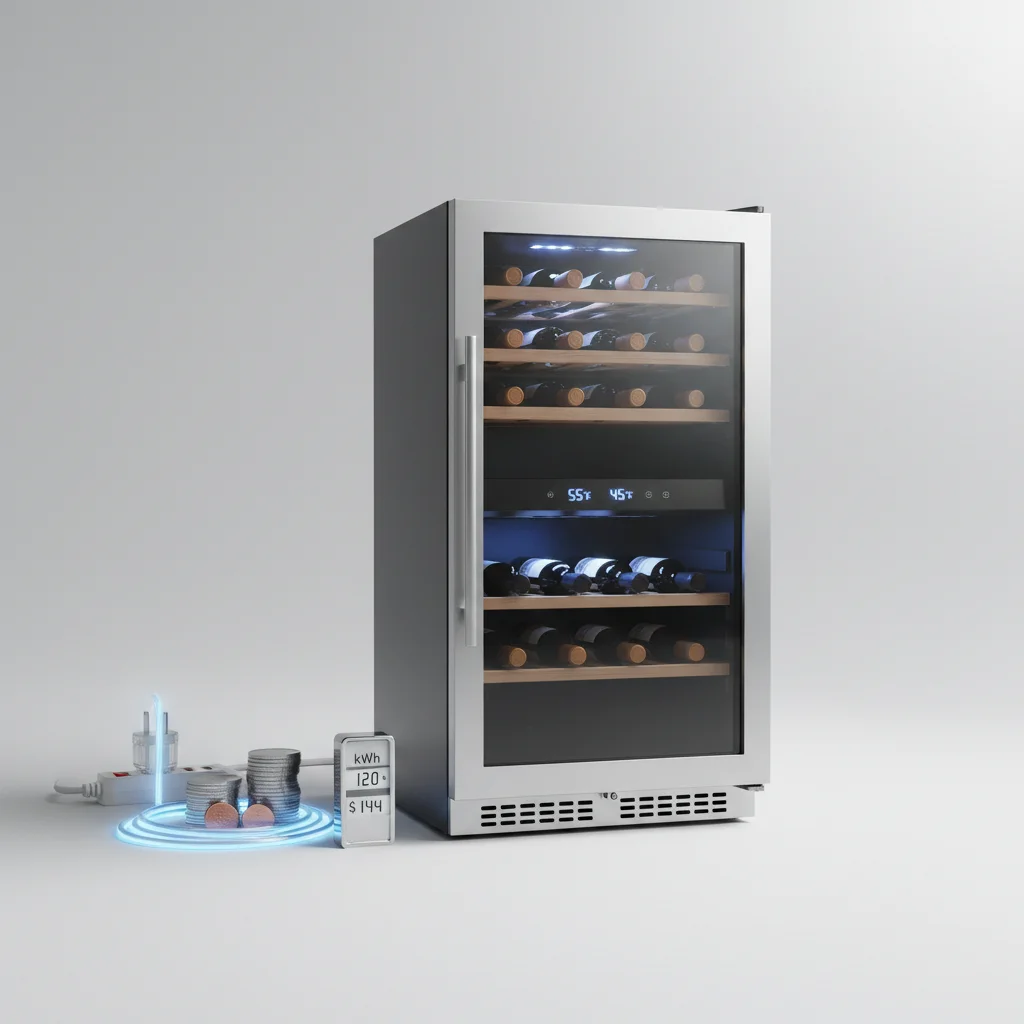
Understanding your wine cooler’s electricity usage is crucial for managing household expenses. On average, a typical wine cooler consumes between 100 to 200 kWh per year, translating to an annual operating cost of approximately $12 to $24, depending on local electricity rates and the unit’s efficiency. This figure can vary significantly based on the cooler’s size, insulation, ambient temperature, and how frequently the door is opened.
Factors Influencing Wine Cooler Electricity Consumption
Several key factors dictate how much electricity your wine cooler uses. The most significant is the unit’s size and capacity; larger coolers with more bottles naturally require more power to maintain a consistent temperature. Insulation quality also plays a vital role; well-insulated models retain cold air more effectively, reducing the compressor’s workload. Furthermore, the ambient temperature of the room where the cooler is placed directly impacts its energy demand. A cooler in a hot garage will work harder than one in a climate-controlled living space.
Estimating Your Wine Cooler’s Annual Cost
To estimate your wine cooler’s annual operating cost, you’ll need to know its wattage or annual kWh rating, usually found on the energy label or in the product specifications. Multiply the annual kWh by your local electricity rate (e.g., $0.12 per kWh). For example, a cooler rated at 150 kWh per year in an area with a $0.12/kWh rate would cost $18 annually. This calculation provides a good baseline, though actual costs can fluctuate.
- Check the energy label for kWh/year.
- Find your local electricity rate (cents per kWh).
- Multiply kWh/year by the rate to get annual cost.
- Consider peak vs. off-peak rates if applicable.
- Factor in usage patterns and ambient temperature.
Energy-Saving Tips for Wine Coolers
|
Our Picks for the Best Wine Cooler in 2026
As an Amazon Associate I earn from qualifying purchases.
|
||
| Num | Product | Action |
|---|---|---|
| 1 | Ivation Premium Stainless Steel 8 Bottle Horizontal Thermoelectric Wine Cooler/Chiller Counter Top Red & White Wine Cellar w/Digital Temperature, Freestanding Refrigerator Quiet Operation Fridge |

|
| 2 | Cuisinart CWC-800CEN 8-Bottle Private Reserve Wine Cellar |
|
| 3 | Wine Enthusiast 6-Bottle Countertop Wine Cooler – Compact Mini Fridge for Kitchen or Bedroom with 3 Shelves, Energy-Efficient Cooling, Adjustable Digital Temperature Control |
|
| 4 | BLACK+DECKER Wine Fridge 12 Bottles, Thermoelectric Wine Cooler Refrigerator with Mirrored Front, Freestanding 12 Bottle Wine Fridge, BD60336 |
|
| 5 | Ivation 12 Bottle Compressor Wine Cooler Refrigerator w/Lock, Large Freestanding Wine Cellar Fridge, 41f-64f Digital Temperature Control Glass Door Black |
|
| 6 | Ivation Premium 6 Bottle Horizontal Thermoelectric Wine Cooler/Chiller Counter Top Red & White Wine Cellar w/Digital Temperature, Freestanding Refrigerator Quiet Operation Fridge |
|
| 7 | BLACK+DECKER BD60026 Wine Cellar with LED Display (8-Bottle Capacity) |
|
| 8 | Wine Enthusiast 32-Bottle Dual Zone MAX Compressor Wine Cooler – Freestanding Mini Fridge with Digital Touchscreen, LED Display, Split Storage for Red & White Wines, Matte Black Refrigerator Home Bar |
|
| 9 | BLACK+DECKER Wine Cooler 8 Bottle,Wine Fridge Thermoelectric with Mirrored Front,Freestanding Wine Cooler Refrigerator &LED Display,BD60326 |
|
| 10 | Ivation 12 Bottle Red And White Wine Thermoelectric Wine Cooler/Chiller Counter Top Wine Cellar with Digital Temperature Display, Freestanding Refrigerator Smoked Glass Door Quiet Operation Fridge |
|
Optimizing your wine cooler’s energy efficiency can lead to noticeable savings. Ensure the cooler is placed in a cool, well-ventilated area, away from direct sunlight or heat sources. Regularly clean the condenser coils to prevent dust buildup, which can hinder heat dissipation and force the compressor to work harder. Avoid overfilling the cooler, as proper air circulation is essential for efficient cooling. Also, minimize how often you open the door to prevent warm air from entering and increasing the internal temperature.
Investing in an energy-efficient model can also make a significant difference. Look for wine coolers with an Energy Star rating, which indicates they meet strict energy efficiency guidelines set by the EPA. These models often feature advanced insulation, more efficient compressors, and better temperature control systems, leading to lower long-term operating costs. While the initial investment might be slightly higher, the savings on your electricity bill can quickly offset the difference.
Comparing Single vs. Dual Zone Energy Use
Dual-zone wine coolers, designed to store different types of wine at their ideal temperatures, typically consume slightly more electricity than single-zone models of comparable size. This is because they often have two separate cooling systems or a more complex internal design to maintain distinct temperature zones. However, the difference is usually marginal and often justified by the added versatility and optimal storage conditions for diverse wine collections. If you only store one type of wine, a single-zone cooler will be more energy-efficient.
Impact of Door Seals and Maintenance
The integrity of your wine cooler’s door seals significantly affects its energy consumption. Worn or damaged seals allow cold air to escape and warm air to enter, forcing the compressor to run more frequently and for longer durations. Regularly inspect the door seals for cracks or gaps and clean them to ensure a tight seal. A simple test involves placing a piece of paper between the door and the frame; if it slides out easily, the seal might need replacement. Proper maintenance, including regular defrosting if your model requires it, also contributes to overall efficiency.
Get our weekly buyer guide
Practical specs, not advice. Unsubscribe anytime.
