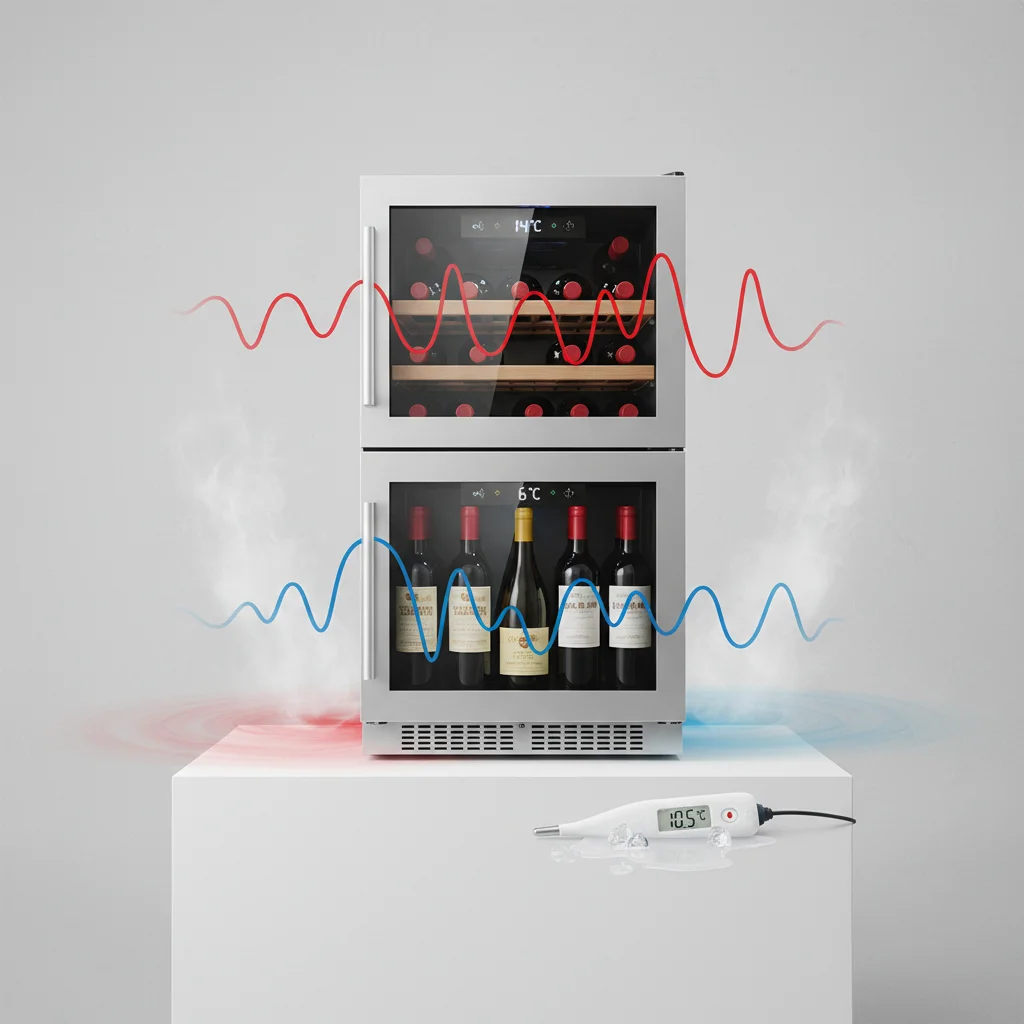
Wine cooler temperature fluctuation is most commonly caused by a faulty thermostat or a compromised door seal, leading to inconsistent cooling and potential damage to your wine collection. Understanding these root causes is crucial for maintaining the optimal environment for your bottles.
Common Causes of Temperature Swings
Several factors can contribute to a wine cooler’s inability to maintain a stable temperature. One of the most frequent culprits is a failing thermostat, which can send incorrect readings to the compressor, causing it to cycle improperly. Another significant issue is a worn or damaged door seal, allowing warm air to seep into the unit and cold air to escape, forcing the compressor to work harder and less efficiently. For expert home wine reviews on this site.
Beyond these, environmental factors play a role. Placing your wine cooler in direct sunlight or too close to a heat source, like an oven or radiator, can overwhelm its cooling capabilities. Additionally, overfilling the cooler can restrict airflow, preventing even temperature distribution and leading to warmer spots within the unit.
Diagnosing Thermostat Issues
If you suspect your thermostat is the problem, you can perform a simple test. Place a reliable, external thermometer inside the wine cooler and monitor it over 24 hours. Compare its readings with the cooler’s internal display. Significant discrepancies or wild swings in the external thermometer’s readings, even when the cooler’s setting remains constant, strongly suggest a faulty thermostat. In such cases, professional diagnosis and replacement are often necessary.
Inspecting and Replacing Door Seals
|
Our Picks for the Best Wine Cooler in 2026
As an Amazon Associate I earn from qualifying purchases.
|
||
| Num | Product | Action |
|---|---|---|
| 1 | Ivation 12 Bottle Red And White Wine Thermoelectric Wine Cooler/Chiller Counter Top Wine Cellar with Digital Temperature Display, Freestanding Refrigerator Smoked Glass Door Quiet Operation Fridge |

|
| 2 | Ivation Premium Stainless Steel 8 Bottle Horizontal Thermoelectric Wine Cooler/Chiller Counter Top Red & White Wine Cellar w/Digital Temperature, Freestanding Refrigerator Quiet Operation Fridge |
|
| 3 | Ivation 12 Bottle Compressor Wine Cooler Refrigerator w/Lock, Large Freestanding Wine Cellar Fridge, 41f-64f Digital Temperature Control Glass Door Black |
|
| 4 | BLACK+DECKER Wine Fridge 12 Bottles, Thermoelectric Wine Cooler Refrigerator with Mirrored Front, Freestanding 12 Bottle Wine Fridge, BD60336 |
|
| 5 | Wine Enthusiast 6-Bottle Countertop Wine Cooler – Compact Mini Fridge for Kitchen or Bedroom with 3 Shelves, Energy-Efficient Cooling, Adjustable Digital Temperature Control |
|
| 6 | BLACK+DECKER Wine Cooler 8 Bottle,Wine Fridge Thermoelectric with Mirrored Front,Freestanding Wine Cooler Refrigerator &LED Display,BD60326 |
|
| 7 | BLACK+DECKER BD60026 Wine Cellar with LED Display (8-Bottle Capacity) |
|
| 8 | Ivation Premium 6 Bottle Horizontal Thermoelectric Wine Cooler/Chiller Counter Top Red & White Wine Cellar w/Digital Temperature, Freestanding Refrigerator Quiet Operation Fridge |
|
| 9 | Wine Enthusiast 32-Bottle Dual Zone MAX Compressor Wine Cooler – Freestanding Mini Fridge with Digital Touchscreen, LED Display, Split Storage for Red & White Wines, Matte Black Refrigerator Home Bar |
|
| 10 | Cuisinart CWC-800CEN 8-Bottle Private Reserve Wine Cellar |
|
A compromised door seal is often visible upon close inspection. Look for cracks, tears, or areas where the seal appears flattened or brittle. You can also perform the ‘paper test’: close the door on a piece of paper, and if you can easily pull it out, the seal is likely weak. Replacing a door seal is a relatively straightforward DIY task for many models, requiring a new gasket and basic tools. This can significantly improve temperature stability and energy efficiency.
- Check for visible damage on the gasket.
- Perform the ‘paper test’ around the entire door.
- Clean the seal regularly to prevent debris buildup.
- Ensure the cooler is level to prevent door misalignment.
- Consider professional replacement if unsure.
Optimizing Placement and Loading
To prevent temperature fluctuations, ensure your wine cooler is placed in a cool, stable environment away from direct sunlight and heat-emitting appliances. Allow adequate clearance around the unit for proper ventilation, typically at least 2-3 inches on all sides and the top. When loading bottles, avoid packing them too tightly. Leave some space between bottles and shelves to allow for proper air circulation, which is essential for maintaining a consistent temperature throughout the cooler.
Regular maintenance, such as cleaning condenser coils and ensuring proper ventilation, also contributes to stable temperatures. Addressing these common issues can extend the life of your wine cooler and protect your valuable collection from temperature-induced spoilage.
When to Call a Professional
While some issues like a faulty door seal can be addressed by a homeowner, more complex problems such as a failing compressor, refrigerant leaks, or intricate electrical issues typically require the expertise of a qualified technician. If you’ve checked the basic causes and your wine cooler continues to experience significant temperature fluctuations, it’s best to consult a professional. They can accurately diagnose the problem and perform the necessary repairs, ensuring your unit operates efficiently and reliably.
Get our weekly buyer guide
Practical specs, not advice. Unsubscribe anytime.

This was incredibly insightful. I thought my wine cooler was just old, but it turns out the compressor was working overtime because of a faulty thermostat. Understanding how these components interact has given me the confidence to troubleshoot future issues. My collection feels much safer now.
Great info on environmental factors! I never considered that placing my cooler too close to the oven could be an issue. Moved it to a cooler spot in the pantry, and the temperature seems much more stable now. My reds and whites are much happier, no more worrying about them getting too warm.
My cooler has been acting up, and I suspected the thermostat. While the advice here was helpful, I wish there were more specific tips on how to test a thermostat without calling a technician. It’s still fluctuating a bit, but I’ve moved it away from the window, which seems to have helped some.
I was having such a headache with my wine cooler’s temperature constantly going up and down, and I couldn’t figure out why. After reading about the door seal issue, I checked mine and sure enough, it was cracked! Replaced it myself and now my wines are finally chilling consistently. This saved me from buying a whole new unit.