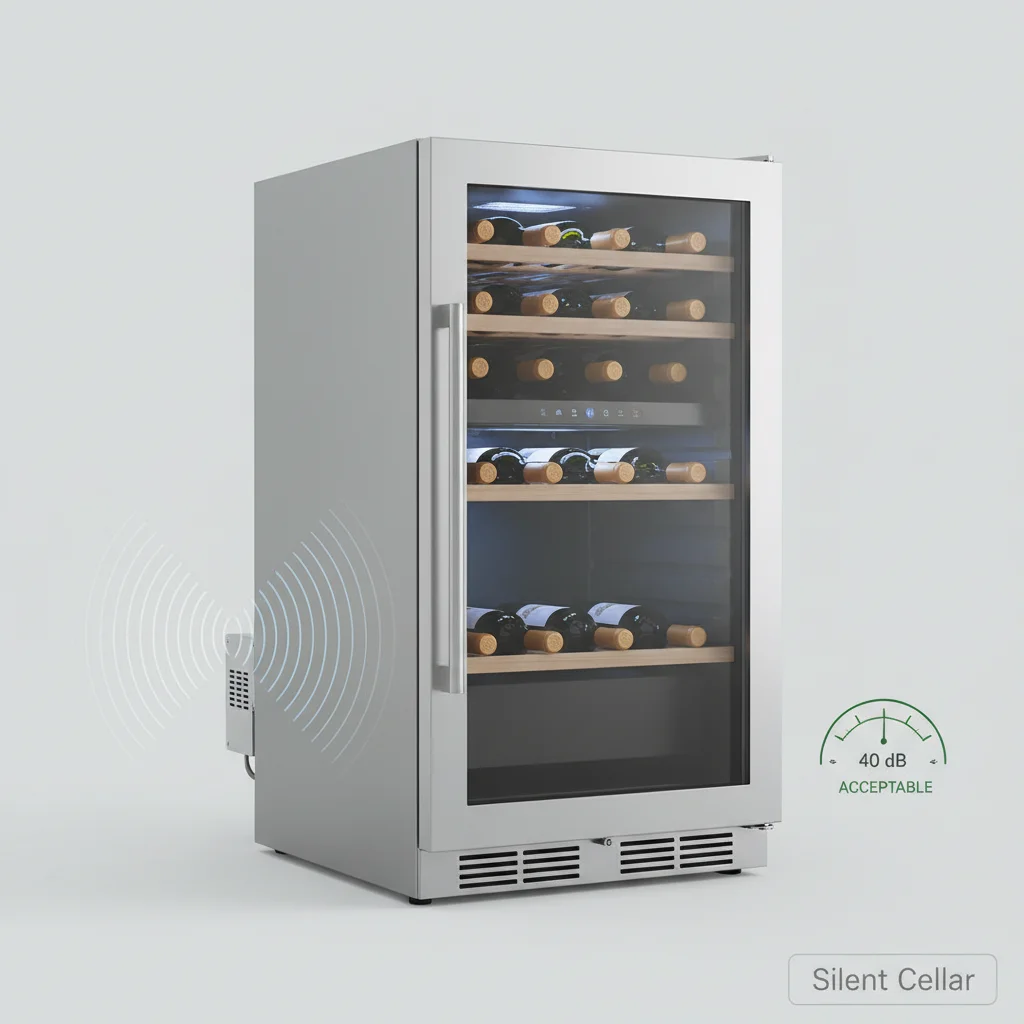
An acceptable wine cooler compressor noise level typically falls between 35 and 45 decibels (dB). This range is comparable to a quiet library or a soft whisper, ensuring your wine cooler operates without being a significant disturbance in your home. Anything consistently above 50 dB might indicate an issue or simply be a louder model that could disrupt your living space.
Understanding Decibel Levels for Wine Coolers
Decibels measure sound intensity, and for home appliances like wine coolers, lower numbers are always better. A quiet hum is expected, as the compressor is the heart of the cooling system, circulating refrigerant to maintain the desired temperature. However, excessive noise can be a sign of a problem, such as a loose component, an aging compressor, or an uneven placement causing vibrations.
When researching new wine coolers, always check the manufacturer’s specifications for noise levels. Some premium models are designed with advanced vibration dampening technology to keep noise to a minimum, often achieving levels closer to 30-35 dB, which is barely noticeable.
Common Causes of Increased Compressor Noise
Several factors can contribute to a wine cooler’s compressor becoming louder than usual. One common issue is improper leveling. If the unit isn’t perfectly balanced, the compressor’s vibrations can be amplified, leading to rattling or buzzing sounds. Another cause can be dust and debris accumulating around the compressor or condenser coils, forcing the unit to work harder and thus louder.
Over time, internal components like fan motors or mounting brackets can wear out or become loose, creating additional noise. If your wine cooler is older, the compressor itself might be nearing the end of its lifespan, and increased noise is often one of the first indicators of this decline. Regular maintenance can help mitigate some of these issues.
Troubleshooting and Quieting a Noisy Compressor
|
Our Picks for the Best Wine Cooler in 2026
As an Amazon Associate I earn from qualifying purchases.
|
||
| Num | Product | Action |
|---|---|---|
| 1 | BLACK+DECKER BD60026 Wine Cellar with LED Display (8-Bottle Capacity) |

|
| 2 | Wine Enthusiast 32-Bottle Dual Zone MAX Compressor Wine Cooler – Freestanding Mini Fridge with Digital Touchscreen, LED Display, Split Storage for Red & White Wines, Matte Black Refrigerator Home Bar |
|
| 3 | Wine Enthusiast 6-Bottle Countertop Wine Cooler – Compact Mini Fridge for Kitchen or Bedroom with 3 Shelves, Energy-Efficient Cooling, Adjustable Digital Temperature Control |
|
| 4 | BLACK+DECKER Wine Fridge 12 Bottles, Thermoelectric Wine Cooler Refrigerator with Mirrored Front, Freestanding 12 Bottle Wine Fridge, BD60336 |
|
| 5 | Ivation Premium 6 Bottle Horizontal Thermoelectric Wine Cooler/Chiller Counter Top Red & White Wine Cellar w/Digital Temperature, Freestanding Refrigerator Quiet Operation Fridge |
|
| 6 | Cuisinart CWC-800CEN 8-Bottle Private Reserve Wine Cellar |
|
| 7 | Ivation 12 Bottle Compressor Wine Cooler Refrigerator w/Lock, Large Freestanding Wine Cellar Fridge, 41f-64f Digital Temperature Control Glass Door Black |
|
| 8 | Ivation 12 Bottle Red And White Wine Thermoelectric Wine Cooler/Chiller Counter Top Wine Cellar with Digital Temperature Display, Freestanding Refrigerator Smoked Glass Door Quiet Operation Fridge |
|
| 9 | BLACK+DECKER Wine Cooler 8 Bottle,Wine Fridge Thermoelectric with Mirrored Front,Freestanding Wine Cooler Refrigerator &LED Display,BD60326 |
|
| 10 | Ivation Premium Stainless Steel 8 Bottle Horizontal Thermoelectric Wine Cooler/Chiller Counter Top Red & White Wine Cellar w/Digital Temperature, Freestanding Refrigerator Quiet Operation Fridge |
|
Before calling a technician, there are several steps you can take to troubleshoot a noisy wine cooler compressor. First, ensure the unit is level. Use a spirit level and adjust the leveling feet as needed. Next, clean the condenser coils, usually located at the back or bottom of the unit, using a vacuum cleaner with a brush attachment. This improves airflow and efficiency.
If the noise persists, check for any loose items inside or around the cooler that might be vibrating. Sometimes, simply moving the unit slightly away from a wall can reduce resonant noise. For internal issues, you might need to consult the owner’s manual or a professional.
When to Consider Professional Repair or Replacement
While some noise is normal, persistent loud grinding, clanking, or high-pitched squealing sounds are usually indicators that professional attention is required. These noises often point to a failing compressor, a faulty fan motor, or other significant mechanical problems. Ignoring these signs can lead to complete unit failure and potentially damage your valuable wine collection.
A technician can diagnose the exact cause of the noise and recommend the appropriate repair, which might involve replacing the compressor, fan, or other internal parts. If your wine cooler is old and repairs are costly, it might be more economical to invest in a new, more energy-efficient, and quieter model.
Tips for Minimizing Wine Cooler Noise
- Ensure Proper Leveling: Always use a spirit level to ensure your wine cooler is perfectly balanced on its feet.
- Clean Condenser Coils Regularly: Dust and debris can make the compressor work harder and louder.
- Provide Adequate Ventilation: Allow sufficient space around the unit for proper airflow, especially if it’s a freestanding model.
- Avoid Overloading: An overloaded wine cooler can strain the compressor, leading to increased noise.
- Consider Anti-Vibration Pads: Place rubber or silicone pads under the leveling feet to absorb vibrations.
Frequently Asked Questions
What is an acceptable decibel level for a wine cooler compressor?
An acceptable decibel level for a wine cooler compressor typically ranges between 35 and 45 dB. This noise level is comparable to a quiet library, ensuring the appliance operates without causing significant disturbance in your home.
What causes a wine cooler compressor to become louder?
A wine cooler compressor can become louder due to several factors, including improper leveling of the unit, accumulation of dust and debris on condenser coils, or worn-out internal components like fan motors. An aging compressor nearing its end of life can also increase noise.
How can I troubleshoot a noisy wine cooler compressor?
To troubleshoot a noisy wine cooler compressor, first ensure the unit is level using a spirit level and adjust its feet. Next, clean the condenser coils with a vacuum cleaner to improve airflow. Also, check for any loose items around or inside the cooler that might be vibrating.
When should I call a professional for wine cooler noise?
You should call a professional if your wine cooler exhibits persistent loud grinding, clanking, or high-pitched squealing sounds. These noises often indicate a failing compressor, a faulty fan motor, or other significant mechanical problems that require expert attention.
Can regular maintenance reduce wine cooler noise?
Yes, regular maintenance can significantly reduce wine cooler noise. Ensuring proper leveling, regularly cleaning condenser coils, and providing adequate ventilation around the unit can prevent the compressor from working harder and becoming louder.
Troubleshoot a Noisy Wine Cooler Compressor
Follow these steps to identify and resolve common issues causing increased noise from your wine cooler's compressor before calling a technician.
Use a spirit level to check if your wine cooler is perfectly balanced. Adjust the leveling feet as needed to ensure the unit is stable and vibrations are minimized.
Locate the condenser coils, usually at the back or bottom of the unit. Use a vacuum cleaner with a brush attachment to remove any accumulated dust and debris, which improves airflow and efficiency.
Inspect inside and around the wine cooler for any loose items that might be vibrating against the unit. Sometimes, simply moving the cooler slightly away from a wall can also reduce resonant noise.
Get our weekly buyer guide
Practical specs, not advice. Unsubscribe anytime.

I always thought a little hum was normal, but my new unit was making a weird rattling sound. This post helped me realize it wasn’t just a normal compressor noise. I checked for loose components and found a small screw had come undone on the back panel. Fixed it, and now it’s back to that quiet hum. Saved me a service call!
My old wine cooler started making a racket, way over 50 dB, and I couldn’t figure out why. I thought it was just old age. Turns out, after reading this, I checked the leveling and found it was a bit wobbly. Tightened it up and the noise dropped a bit, but it’s still louder than I’d like. Guess it might be an aging compressor after all, but at least I know what to look for now.
This was super helpful! I’ve been eyeing a few different models and was really concerned about the compressor noise since my last one was so loud. Knowing that 35-45 dB is the sweet spot for a quiet library sound makes it much easier to compare. I’ll definitely be checking the manufacturer’s specifications more closely now to avoid any surprises.
I was so worried about the noise when I bought my new wine cooler, especially since it’s in our open-concept living area. This guide really helped me understand what to expect. Mine runs at about 38 dB, which is exactly like a soft whisper, just as mentioned. It’s barely noticeable, even when I’m reading in the same room. So glad I checked the specs before buying!