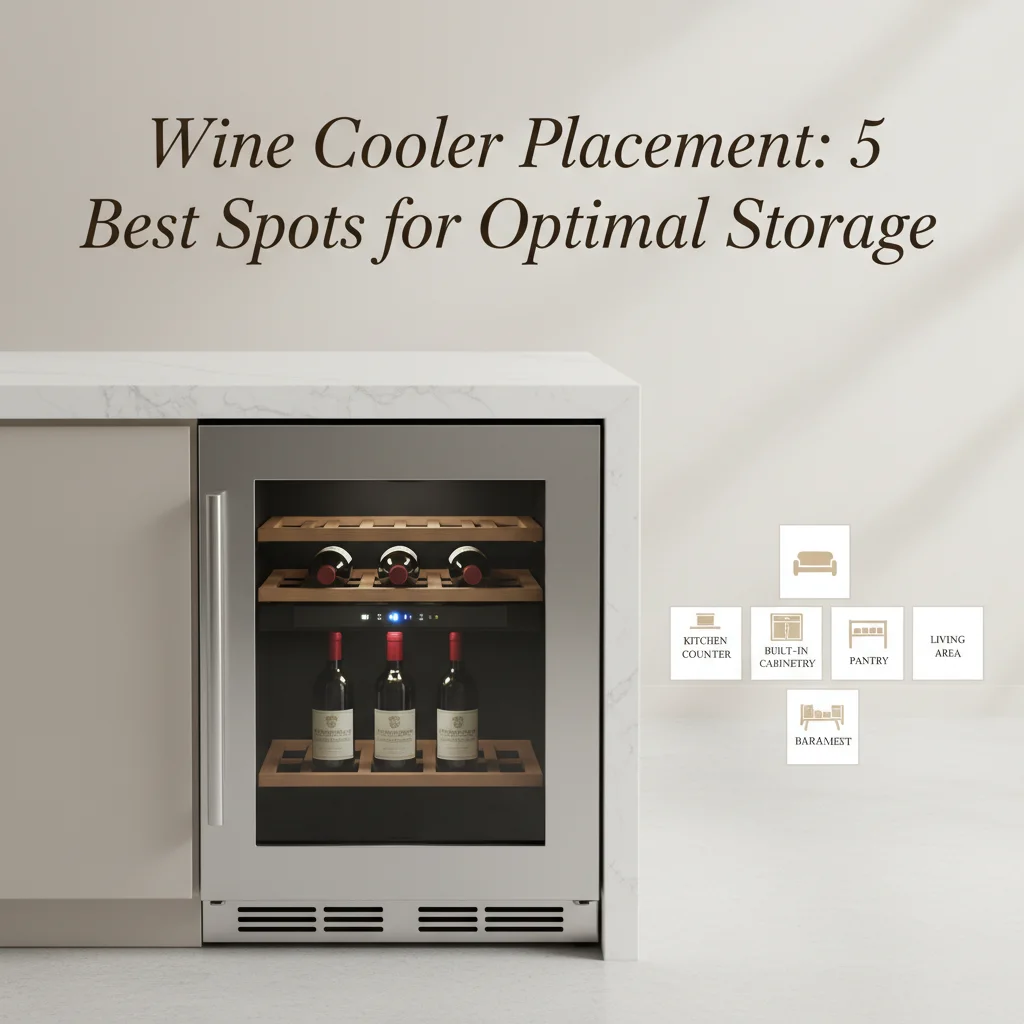
Optimal wine cooler placement is crucial for its performance and the longevity of your wine. The ideal spot for a wine cooler is in a cool, dark, and stable environment, away from direct sunlight and heat sources, maintaining a consistent ambient temperature between 50-80°F (10-27°C). This ensures the unit operates efficiently without overworking its compressor, preserving your wine’s quality.
Understanding Environmental Factors for Wine Coolers
The environment surrounding your wine cooler significantly impacts its efficiency and the quality of your stored wine. Fluctuations in temperature and humidity can stress the cooling system and potentially damage your wine. Avoid placing your cooler near windows, ovens, dishwashers, or heating vents. These areas experience frequent temperature swings that force the cooler to work harder, consuming more energy and potentially shortening its lifespan. A stable environment is key to maintaining the internal temperature and humidity levels necessary for proper wine aging. For browse all home wine articles on this site.
Furthermore, proper ventilation is essential. Wine coolers, especially compressor-based models, generate heat as they operate. If this heat cannot dissipate, it can lead to overheating and reduced efficiency. Ensure there is adequate space around the back and sides of the unit, typically 2-5 inches, to allow for proper airflow. Consult your specific model’s manual for precise clearance requirements.
Freestanding vs. Built-In Wine Cooler Placement
The type of wine cooler you own dictates its placement requirements. Freestanding wine coolers are designed to vent from the back and require ample space around all sides for heat dissipation. They are best suited for open areas like living rooms, dining rooms, or basements where airflow is unrestricted. Placing a freestanding unit in a confined space, such as inside a cabinet without proper ventilation, can lead to overheating and compressor failure.
Built-in wine coolers, on the other hand, are designed to vent from the front, allowing them to be seamlessly integrated into cabinetry or under counters. These units are ideal for kitchens or dedicated bar areas where space is at a premium. While they vent from the front, it’s still important to ensure the front grille is not obstructed to allow for proper airflow. Always double-check the dimensions and ventilation requirements of your built-in model before installation.
Ideal Locations Within Your Home
|
Our Picks for the Best Wine Cooler in 2026
As an Amazon Associate I earn from qualifying purchases.
|
||
| Num | Product | Action |
|---|---|---|
| 1 | Cuisinart CWC-800CEN 8-Bottle Private Reserve Wine Cellar |

|
| 2 | BLACK+DECKER Wine Cooler 8 Bottle,Wine Fridge Thermoelectric with Mirrored Front,Freestanding Wine Cooler Refrigerator &LED Display,BD60326 |
|
| 3 | Wine Enthusiast 32-Bottle Dual Zone MAX Compressor Wine Cooler – Freestanding Mini Fridge with Digital Touchscreen, LED Display, Split Storage for Red & White Wines, Matte Black Refrigerator Home Bar |
|
| 4 | Ivation 12 Bottle Compressor Wine Cooler Refrigerator w/Lock, Large Freestanding Wine Cellar Fridge, 41f-64f Digital Temperature Control Glass Door Black |
|
| 5 | Wine Enthusiast 6-Bottle Countertop Wine Cooler – Compact Mini Fridge for Kitchen or Bedroom with 3 Shelves, Energy-Efficient Cooling, Adjustable Digital Temperature Control |
|
| 6 | Ivation 12 Bottle Red And White Wine Thermoelectric Wine Cooler/Chiller Counter Top Wine Cellar with Digital Temperature Display, Freestanding Refrigerator Smoked Glass Door Quiet Operation Fridge |
|
| 7 | BLACK+DECKER Wine Fridge 12 Bottles, Thermoelectric Wine Cooler Refrigerator with Mirrored Front, Freestanding 12 Bottle Wine Fridge, BD60336 |
|
| 8 | Ivation Premium 6 Bottle Horizontal Thermoelectric Wine Cooler/Chiller Counter Top Red & White Wine Cellar w/Digital Temperature, Freestanding Refrigerator Quiet Operation Fridge |
|
| 9 | BLACK+DECKER BD60026 Wine Cellar with LED Display (8-Bottle Capacity) |
|
| 10 | Ivation Premium Stainless Steel 8 Bottle Horizontal Thermoelectric Wine Cooler/Chiller Counter Top Red & White Wine Cellar w/Digital Temperature, Freestanding Refrigerator Quiet Operation Fridge |
|
Considering the environmental factors and cooler type, certain areas in your home are more suitable for wine cooler placement. Basements are often ideal due to their naturally cooler and more stable temperatures, as well as lower light exposure. Dedicated wine cellars or pantries also offer excellent conditions. For those without these options, a quiet corner in a dining room or living area, away from direct sunlight and heat sources, can work well.
- Basements: Naturally cool, dark, and stable.
- Dedicated Wine Cellars/Pantries: Optimized for wine storage.
- Dining Rooms: Can be suitable if away from heat and light.
- Living Rooms: Possible with careful consideration of heat sources and sunlight.
- Kitchens (Built-in only): Convenient for entertaining, but requires front-venting models.
Avoiding Common Placement Mistakes
Many common mistakes can compromise your wine cooler’s performance and the quality of your wine. One of the most frequent errors is placing the cooler in direct sunlight. UV rays can prematurely age and damage wine, even through tinted cooler doors. Another mistake is positioning it too close to heat-generating appliances like refrigerators, ovens, or dishwashers, which forces the cooler to work harder and consume more energy.
Additionally, avoid placing your wine cooler in high-traffic areas where it might be bumped or vibrated frequently. Constant vibrations can disturb the sediment in wine bottles and negatively impact the aging process. Ensure the cooler is placed on a level, sturdy surface to prevent vibrations and ensure proper door sealing.Proper leveling also helps the compressor function optimally and prevents undue stress on the unit’s components.
Maintaining Optimal Performance After Placement
Once your wine cooler is in its ideal location, ongoing maintenance is crucial for optimal performance. Regularly clean the condenser coils, typically located at the back or bottom of the unit, to prevent dust and debris buildup. This buildup can restrict airflow and reduce cooling efficiency. A soft brush or vacuum cleaner attachment can be used for this task every 6-12 months.
Monitor the internal temperature and humidity levels periodically to ensure they remain within the recommended ranges for your wine. If your cooler has a water tray for humidity, ensure it’s filled as needed. Check the door seal for any signs of wear or gaps, as a compromised seal can lead to temperature fluctuations and increased energy consumption.A well-maintained wine cooler, correctly placed, will provide years of reliable service, protecting your valuable wine collection.
Frequently Asked Questions
What is the ideal temperature range for a wine cooler's environment?
The ideal ambient temperature for a wine cooler's environment is between 50-80u00b0F (10-27u00b0C). Maintaining this range ensures the unit operates efficiently without overworking its compressor, preserving the wine's quality.
How much space is needed around a freestanding wine cooler for ventilation?
Freestanding wine coolers typically require 2-5 inches of space around the back and sides for proper heat dissipation. Always consult your specific model's manual for precise clearance requirements to prevent overheating.
Can I place a built-in wine cooler in a kitchen cabinet?
Yes, built-in wine coolers are specifically designed to vent from the front, allowing them to be seamlessly integrated into cabinetry or under counters in kitchens or bar areas. Ensure the front grille remains unobstructed for proper airflow.
Why should I avoid placing my wine cooler in direct sunlight?
Placing your wine cooler in direct sunlight is a common mistake because UV rays can prematurely age and damage wine, even through tinted cooler doors. This exposure negatively impacts the wine's quality and longevity.
How often should I clean the condenser coils of my wine cooler?
You should regularly clean the condenser coils of your wine cooler every 6-12 months. This prevents dust and debris buildup, which can restrict airflow and reduce cooling efficiency, ensuring optimal performance.
Get our weekly buyer guide
Practical specs, not advice. Unsubscribe anytime.

The point about maintaining a consistent ambient temperature between 50-80°F is really key. I never thought much about the room temperature affecting the cooler itself, just the wine inside. I’ve since adjusted my thermostat slightly in the room where my cooler is, and it seems to be working more efficiently. Good reminder that the environment matters.
This was super helpful! I was about to put my new wine cooler in a corner near our dishwasher, thinking it would be out of the way. Luckily, I read this first and learned that dishwashers are a big no-no due to temperature swings. I found a much better spot in our dining room that’s cooler and more stable. My wine collection is safe!
I used to have my wine cooler in the kitchen right next to the oven, and I always wondered why it seemed to run so much. After reading about avoiding heat sources, I moved it to our finished basement. What a difference! It’s much quieter now and I’m sure my energy bill will thank me. My wines are definitely happier in a more stable environment.
I appreciate the tips on placement, especially about keeping it away from direct sunlight. I had mine by a window for a while and noticed the compressor was always on. Moving it helped, but I still wish there was more advice on dealing with smaller spaces where ideal placement isn’t always an option. It’s a good guide, just not perfect for everyone.