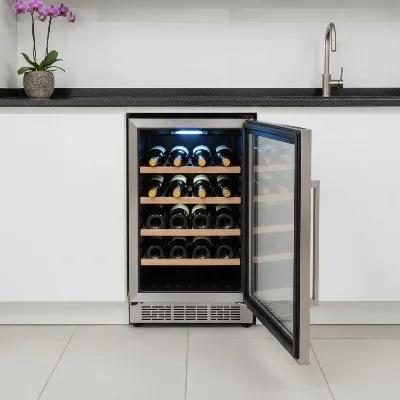
Living in a small apartment often means making clever choices about maximizing your space without sacrificing life’s little luxuries. For wine enthusiasts, this typically brings up a common dilemma: how do you properly store your treasured bottle collection when square footage is at a premium? The answer lies in the perfect wine cooler. Far more than just a mini-fridge, a dedicated wine cooler is designed to provide optimal conditions, safeguarding your wines from environmental fluctuations that can spoil their delicate flavors and aromas. This comprehensive guide will navigate the world of compact wine coolers, helping you understand their features, types, and the top choices for apartment dwellers in 2026, ensuring every sip is as intended.
What is a Wine Cooler? Why Do You Need One?
A wine cooler, often referred to as a wine refrigerator or wine cellar, is a specialized appliance crafted to store wine under ideal conditions. Unlike a standard kitchen refrigerator, which operates at temperatures too cold and humidity levels too low for wine, a wine cooler maintains precise temperature and humidity to ensure your bottles age gracefully or are ready to serve at their peak. These appliances protect wine from harmful elements like heat, light, vibrations, and inconsistent temperatures, all of which can rapidly degrade wine quality.
Consider the delicate nature of wine: even slight temperature swings can prematurely age it, while excessive vibration can disturb sediments and dull flavors. Direct light, especially UV rays, can cause “light strike,” leading to unpleasant aromas. A good wine cooler mitigates these risks, providing a stable, dark, and vibration-free environment. For anyone who appreciates wine beyond a casual bottle, a dedicated cooler is an indispensable investment, preserving both everyday enjoyment and the longevity of more significant vintages.
Classifying Wine Coolers: Which One Is Right for You?
Choosing the right wine cooler involves understanding the different classifications based on size, cooling mechanism, and style. Each type offers distinct advantages, making some more suitable for small apartment living than others.
By Size and Capacity
Wine coolers come in a range of sizes, measured by their bottle capacity. For small apartments, compact dimensions are paramount, often meaning a trade-off between space and storage volume.
- Mini Wine Coolers (Under 20 Bottles): These are ideal for casual drinkers or those with very limited space. Capacities typically range from 6 to 12 bottles, making them perfect for countertops or discreet placement. They’re great for chilling a few bottles ready for immediate enjoyment.
- Mid-Size Wine Coolers (20-50 Bottles): Offering a good balance between capacity and footprint, these units are popular for small to medium collections. They can be freestanding, under-counter, or slim-profile models, fitting into nooks or integrated into cabinetry. Many apartment dwellers find this range hits the sweet spot.
- Large Wine Coolers (Over 50 Bottles): While less common for typical small apartments, some spacious studios or larger units might accommodate slim, tall models. These are generally for more serious collectors and offer greater stability for long-term aging.
|
Our Picks for the Best Wine Cooler in 2026
As an Amazon Associate I earn from qualifying purchases.
|
||
| Num | Product | Action |
|---|---|---|
| 1 | Ivation Premium Stainless Steel 8 Bottle Horizontal Thermoelectric Wine Cooler/Chiller Counter Top Red & White Wine Cellar w/Digital Temperature, Freestanding Refrigerator Quiet Operation Fridge |

|
| 2 | Ivation 12 Bottle Red And White Wine Thermoelectric Wine Cooler/Chiller Counter Top Wine Cellar with Digital Temperature Display, Freestanding Refrigerator Smoked Glass Door Quiet Operation Fridge |
|
| 3 | BLACK+DECKER Wine Fridge 12 Bottles, Thermoelectric Wine Cooler Refrigerator with Mirrored Front, Freestanding 12 Bottle Wine Fridge, BD60336 |
|
| 4 | Wine Enthusiast 32-Bottle Dual Zone MAX Compressor Wine Cooler – Freestanding Mini Fridge with Digital Touchscreen, LED Display, Split Storage for Red & White Wines, Matte Black Refrigerator Home Bar |
|
| 5 | Ivation 12 Bottle Compressor Wine Cooler Refrigerator w/Lock, Large Freestanding Wine Cellar Fridge, 41f-64f Digital Temperature Control Glass Door Black |
|
| 6 | Wine Enthusiast 6-Bottle Countertop Wine Cooler – Compact Mini Fridge for Kitchen or Bedroom with 3 Shelves, Energy-Efficient Cooling, Adjustable Digital Temperature Control |
|
| 7 | Cuisinart CWC-800CEN 8-Bottle Private Reserve Wine Cellar |
|
| 8 | BLACK+DECKER BD60026 Wine Cellar with LED Display (8-Bottle Capacity) |
|
| 9 | BLACK+DECKER Wine Cooler 8 Bottle,Wine Fridge Thermoelectric with Mirrored Front,Freestanding Wine Cooler Refrigerator &LED Display,BD60326 |
|
| 10 | Ivation Premium 6 Bottle Horizontal Thermoelectric Wine Cooler/Chiller Counter Top Red & White Wine Cellar w/Digital Temperature, Freestanding Refrigerator Quiet Operation Fridge |
|
By Cooling Mechanism
The technology used to cool your wine cooler significantly impacts its performance, noise, energy consumption, and ideal placement.
- Compressor Wine Coolers: These operate much like a standard refrigerator, using a compressor, refrigerant, and evaporator coils. They are powerful, capable of maintaining consistent temperatures even in warmer ambient environments, and can cool to lower temperatures.
> “Compressor-based coolers offer robust cooling power and temperature stability, making them an excellent choice for varied climates or when precise temperature control is paramount for aging valuable wines.” – Dr. Eleanor Vance, Oenology Systems Engineer
However, they can be louder and produce slight vibrations, which some believe can disturb wine sediment. Modern designs often minimize noise and vibration. - Thermoelectric Wine Coolers: Utilizing the Peltier effect, these coolers use an electric current to transfer heat, requiring no refrigerants or mechanical compressors. Their main advantages are near-silent operation and zero vibration, which is crucial for preserving delicate wines. They are also generally more energy-efficient in stable environments. However, thermoelectric coolers are less powerful and are more sensitive to ambient room temperature, performing best in cooler, stable settings and for smaller collections.
By Style
The aesthetic and installation options of a wine cooler are important for seamless integration into an apartment’s design.
- Freestanding Wine Coolers: These units are designed to stand alone, with ventilation typically at the rear or sides. They require adequate space around them for heat dissipation. Freestanding models offer flexibility in placement, from a dining nook to a living room corner.
- Built-In (Under-Counter) Wine Coolers: Perfect for creating a sleek, integrated look, these coolers are designed to fit under kitchen counters or into custom cabinetry. They feature front-ventilation to expel heat, allowing for flush installation without overheating. These are a sophisticated choice for modern apartment kitchens.
- Countertop Wine Coolers: These compact models are designed to sit directly on a kitchen counter or bar cart. They are typically mini-capacity units, offering convenient access and portability, ideal for truly tiny spaces where every inch of floor space is precious.
Comparison Table of Wine Cooler Types
To help you make an informed decision, here’s a detailed comparison of the most relevant wine cooler types for apartment living:
| Feature | Mini Wine Cooler (Under 20 Bottles) | Mid-Size Wine Cooler (20-50 Bottles) | Compressor Wine Cooler | Thermoelectric Wine Cooler |
|---|---|---|---|---|
| Capacity | 6-18 bottles | 20-49 bottles | Varies (often 20+ bottles) | Typically 6-20 bottles |
| Noise Level | Low to moderate | Low to moderate | Moderate (modern units are quieter) | Very Low / Silent |
| Vibration | Minimal | Minimal | Low to Moderate | Virtually None |
| Cooling Power | Moderate | Good | Powerful, stable | Moderate, sensitive to ambient temp |
| Energy Usage | Moderate | Moderate | Higher initial usage, then cycles | Lower in stable temps, constant draw |
| Ideal Use | Small collections, immediate serving | Growing collections, some aging | Varied climates, larger collections | Small collections, quiet environments |
| Placement | Countertop, small nooks | Freestanding, built-in, slim | Freestanding, built-in (front vent) | Countertop, freestanding |
| Price Range | $100 – $400 | $300 – $1000 | $300 – $1500+ | $100 – $500 |
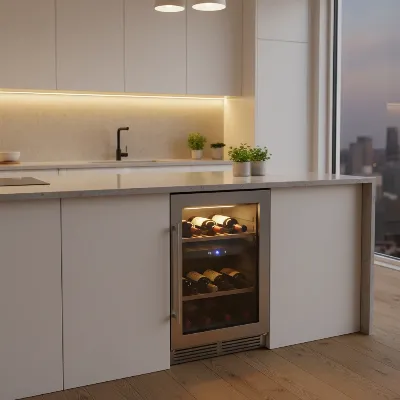 A sleek, modern compact wine cooler integrated into a small apartment kitchen counter with wine bottles visible.
Factors to Consider When Buying a Wine Cooler (Buying Guide)
Selecting the ideal wine cooler for a small apartment requires careful consideration of several key factors beyond just capacity.
Capacity and Bottle Count
While advertised capacity is a good starting point, remember that actual storage can vary based on bottle shapes (e.g., Bordeaux, Burgundy, Champagne bottles have different dimensions). It’s wise to consider your current collection and anticipate future growth. For small apartments, an 8 to 45-bottle capacity is usually sufficient, balancing storage needs with available space. Always check if shelves are adjustable to accommodate various bottle sizes.
Temperature Range and Control
The ability to maintain consistent temperatures is paramount. Look for models with precise digital controls. A single-zone cooler is suitable if you primarily store one type of wine (reds or whites). However, if you enjoy both reds and whites, a dual-zone cooler is highly recommended, allowing you to set different temperatures for each type, ensuring they are perfectly chilled for serving. Red wines typically store best at 55°F (13°C), while whites and sparkling wines prefer 45-50°F (7-10°C).
Noise Level
In a small apartment, where living and kitchen areas are often combined, a noisy appliance can be a significant disturbance. Thermoelectric coolers are virtually silent, making them excellent for quiet environments. Compressor models have improved significantly, with many now featuring low-noise or “whisper-quiet” operation. Check decibel ratings or user reviews for real-world performance.
Energy Efficiency
An energy-efficient wine cooler helps keep electricity bills down, which is especially important for continuous operation. Look for Energy Star certified models or those that explicitly state low power consumption. Thermoelectric units are often more efficient in stable ambient temperatures, while well-insulated compressor units can also be energy-conscious.
Design and Aesthetics
Your wine cooler is an appliance, but it’s also a piece of furniture in a small space. Choose a design that complements your apartment’s decor. Popular finishes include stainless steel, black, or integrated panel-ready options. Features like UV-protected tempered glass doors, soft LED interior lighting, and sleek handles add to the aesthetic appeal while also being functional. Front ventilation is essential if you plan a built-in installation.
Additional Features
Modern wine coolers come with a variety of features that enhance functionality and wine preservation:
- UV Protection: Tinted or double-paned glass doors protect wine from harmful UV rays.
- Humidity Control: Maintaining 65-75% humidity prevents corks from drying out, which can lead to oxidation.
- Vibration Reduction: Essential for long-term storage, as vibrations can disrupt sediments. Compressor coolers often include anti-vibration technology.
- Adjustable Shelving: Allows for flexible storage of different bottle sizes.
- Security Lock: Useful for protecting valuable collections or in households with children.
Budget
Wine coolers range widely in price, from budget-friendly countertop models to high-end built-in units. Set a realistic budget, but also consider the long-term value. Investing a little more in a reputable brand with good features can mean better performance and longevity for your wine collection. Prices for apartment-friendly models can range from under $200 for mini units to over $1,000 for feature-rich, mid-size coolers.
Top 10 Best Wine Coolers for Small Apartments in 2026
For apartment dwellers in 2026, the market offers a fantastic array of wine coolers designed with compact living in mind. These top picks blend efficiency, style, and advanced features to ensure your wine collection thrives, even in limited spaces.
-
The Compact Countertop Connoisseur (6-8 Bottles): Perfect for the absolute smallest spaces, this thermoelectric marvel sits on your counter, offering whisper-quiet operation and vibration-free cooling. Ideal for a few bottles of your favorite reds or whites, ready to serve. Look for models with touch controls and UV-resistant glass.
- Pros: Ultra-compact, silent, no vibration, immediate access.
- Cons: Very limited capacity, sensitive to room temperature.
- Ideal for: Casual drinkers, entertainers needing quick access to chilled wine.
-
The Slimline 12-Bottle Single-Zone: Designed to fit into narrow gaps, this compressor-based unit offers a sleek profile with enough capacity for a modest collection. Its quiet compressor technology ensures stable temperatures, and many models feature an elegant glass door with LED lighting to showcase your wines.
- Pros: Space-saving vertical design, stable temperature, attractive display.
- Cons: Single zone only, limited capacity for diverse collections.
- Ideal for: Those with a preference for one wine type (e.g., all reds or all whites).
-
The Under-Counter Dual-Zone Dynamo (20-30 Bottles): A popular choice for built-in integration in modern apartment kitchens. This compressor model features front ventilation, allowing it to blend seamlessly with cabinetry. Dual-zone cooling is a game-changer for storing both reds and whites at their ideal temperatures.
- Pros: Integrated look, dual-zone flexibility, good capacity.
- Cons: Requires specific cabinet dimensions for installation.
- Ideal for: Apartment renovations or new builds, mixed wine collections.
-
The Vibration-Free Thermoelectric Tower (16-20 Bottles): For those prioritizing absolute silence and zero vibration, this mid-capacity thermoelectric unit stands tall and slim. While best suited for stable indoor environments, its eco-friendly cooling and elegant design make it a great freestanding option for a living or dining area.
- Pros: Extremely quiet, no vibration, environmentally friendly.
- Cons: Less powerful cooling, less effective in hot rooms.
- Ideal for: Quiet living spaces, sensitive wines, smaller collections.
-
The Smart & Connected Mini-Cellar (30-45 Bottles): Representing the future of wine storage, this compressor-based cooler often includes smart features like app control for temperature monitoring and adjustment, and inventory management. Its efficient design offers ample storage while remaining apartment-friendly in size.
- Pros: Large capacity for an apartment, smart features, precise control.
- Cons: Higher price point due to advanced technology.
- Ideal for: Tech-savvy collectors, those building a serious collection.
-
The Budget-Friendly Compact Dual-Zone (18-24 Bottles): Proving that quality wine storage doesn’t have to break the bank, this model offers dual-zone cooling in a compact footprint. While it might be a bit louder than premium options, it provides excellent value for separating your reds and whites.
- Pros: Affordable dual-zone storage, good capacity for the price.
- Cons: Potentially higher noise levels compared to high-end models.
- Ideal for: Entry-level collectors, those on a tighter budget.
-
The Outdoor-Rated Apartment Companion (20-25 Bottles): For apartments with balconies or small patios, an outdoor-rated wine cooler allows for flexible placement. These robust compressor units are built to withstand a wider range of ambient temperatures, offering reliable cooling both indoors and out.
- Pros: Versatile placement, durable construction, stable cooling.
- Cons: Can be pricier, bulkier than indoor-only models.
- Ideal for: Apartments with outdoor entertaining spaces, those needing extra cooling resilience.
-
The Convertible Beverage & Wine Chiller (20-30 Bottles): This versatile unit often features removable or adjustable shelving, allowing it to function as a dedicated wine cooler or a mixed beverage cooler. Perfect for multi-use apartments where space is at a premium and you need to store more than just wine.
- Pros: Flexible storage for wine and other drinks, adjustable interior.
- Cons: May not offer the most specialized wine features (e.g., specific humidity control).
- Ideal for: Households with diverse drink preferences, social entertainers.
-
The Panel-Ready Integrated Solution (40-50 Bottles): For the ultimate seamless kitchen design, this high-capacity built-in cooler can accept custom cabinetry panels, disappearing almost entirely into your apartment’s aesthetic. It offers premium compressor performance for serious collections.
- Pros: Fully integrated look, large capacity, premium performance.
- Cons: Highest price point, requires custom installation.
- Ideal for: Luxury apartments, custom kitchen designs, serious collectors.
-
The Portable Party Pal (4-6 Bottles): While not for long-term storage, this ultra-portable thermoelectric cooler is perfect for moving from kitchen to living room, or even taking to a friend’s apartment for a dinner party. It keeps a few bottles perfectly chilled for immediate enjoyment.
- Pros: Extremely portable, lightweight, quick chilling for serving.
- Cons: Not for serious storage, very limited capacity.
- Ideal for: Social gatherings, occasional wine enjoyment, maximum flexibility.
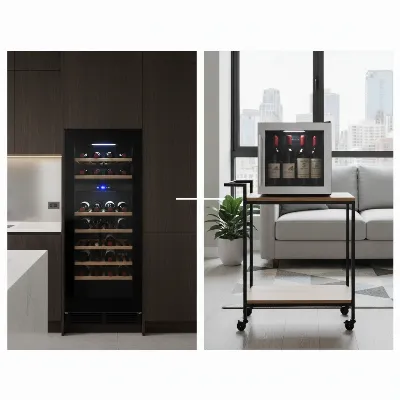 A side-by-side comparison of a sleek built-in wine cooler and a compact countertop wine cooler in a modern apartment setting.
How to Use and Maintain Your Wine Cooler Correctly
Proper usage and maintenance are crucial to extending the life of your wine cooler and ensuring your wines are always stored in optimal conditions.
Installation and Setup
- Placement: Position your wine cooler on a level surface, away from direct sunlight, heat sources (like ovens or radiators), and excessive vibrations. These external factors can force the cooler to work harder, reducing its efficiency and lifespan.
- Ventilation: Ensure there’s adequate space around freestanding units for proper airflow. For built-in models, verify that the front ventilation is unobstructed. Restricted airflow can lead to overheating and damage.
- Initial Setup: After placement, allow the cooler to stand upright for a few hours before plugging it in. This allows the refrigerant to settle. Once plugged in, let it run empty for at least 24 hours to reach the desired temperature and stabilize before loading your wines.
Temperature and Bottle Arrangement
- Set Temperature: Choose the appropriate temperature settings based on your wine types (e.g., 55°F for reds, 45-50°F for whites). Avoid frequent temperature adjustments, as this can strain the cooling system.
- Arrangement: Store bottles horizontally to keep corks moist, preventing air from entering the bottle and oxidizing the wine. Organize your collection logically (e.g., by varietal or region) to minimize the need to move bottles, reducing the risk of accidental damage and disturbing sediments. Avoid overstocking, as overcrowding can restrict airflow and hinder proper cooling.
Cleaning and Maintenance
Regular cleaning and maintenance prevent odors, mold, and ensure efficient operation.
- Interior Cleaning: At least once or twice a year, unplug the cooler, remove all bottles, and wipe down the interior with a soft cloth and a mild, unscented cleaning solution (like diluted white vinegar or baking soda solution). Avoid harsh chemicals that can leave residues or damage surfaces. Rinse thoroughly with clean water and dry completely before reloading.
- Exterior Cleaning: Wipe down the exterior with a damp cloth regularly to remove dust and fingerprints. For stainless steel, use a specialized cleaner.
- Door Seals: Inspect door gaskets periodically for wear and tear. Clean them with mild soap and water to ensure a tight seal, which is critical for maintaining internal temperature and humidity. A thin layer of petroleum jelly can keep seals flexible.
- Condenser Coils: For compressor models, periodically (once a year or as per manual) clean dust and debris from the condenser coils, usually located at the back or bottom of the unit. Unplug the unit first. This helps maintain efficiency.
- Air Filter: If your cooler has an activated carbon air filter, replace it according to the manufacturer’s recommendations, typically every 3-6 months, to prevent odors.
- Humidity: Monitor humidity levels, especially for long-term storage. Most coolers maintain good humidity, but if levels are too low, a small humidifier tray can be used.
> “Preventative maintenance, like regular cleaning of condenser coils and door seals, is key. It’s like taking care of your car; small steps prevent big problems and extend the life of your appliance for years of perfect wine storage.” – Mr. Anthony Ricci, Appliance Longevity Specialist
Long-Term Care
- Keep it Full: A partially filled wine cooler requires more energy to maintain temperature stability. Keep it at least 75% full for optimal energy efficiency.
- Professional Check: Consider a professional service check every few years, especially for high-end models, to ensure all components are functioning correctly.
Conclusion
Choosing the perfect wine cooler for a small apartment might seem daunting, but with a clear understanding of your needs and the options available, it becomes an exciting venture. Whether you opt for a compact countertop model for convenience, a sleek built-in for seamless integration, or a quiet thermoelectric unit for ultimate tranquility, the right wine cooler will elevate your wine experience. By carefully considering capacity, cooling technology, design, and essential features like dual-zone cooling and vibration reduction, you can find a solution that not only preserves your collection but also enhances your living space. With proper care and maintenance, your chosen wine cooler will reliably keep every bottle at its peak, ready for you to enjoy.
What kind of wine cooler would best fit your unique apartment lifestyle?
Câu Hỏi Thường Gặp
How many bottles can a typical apartment wine cooler hold?
Apartment wine coolers vary widely, typically holding anywhere from 6 to 45 bottles. Countertop models usually store 6-12, while slim freestanding or under-counter units can accommodate 20-45 bottles, balancing compact design with practical storage needs for urban living.
Are dual-zone wine coolers necessary for small apartments?
Dual-zone wine coolers are not strictly necessary but are highly recommended if you enjoy both red and white wines. They allow you to maintain two distinct temperature zones, ensuring each wine type is stored and served at its ideal temperature, which is a significant advantage for a diverse collection.
What is the best type of wine cooler for quiet operation in a small space?
Thermoelectric wine coolers are renowned for their almost silent and vibration-free operation, making them an excellent choice for small apartments where noise can be a concern. While less powerful, they excel in stable indoor environments and for smaller collections.
Can I install a built-in wine cooler in any apartment kitchen?
Built-in wine coolers require specific cabinet dimensions and often front ventilation for proper heat dissipation. While ideal for a seamless look, check your kitchen’s existing cabinetry space and ensure proper clearance and electrical access before committing to a built-in model.
How often should I clean my apartment wine cooler?
For optimal performance and to prevent odors or mold, it’s recommended to clean the interior of your wine cooler at least once or twice a year. Regular wiping of the exterior and checking door seals also contributes to its longevity and efficiency.
Do all wine coolers protect against UV light?
Not all wine coolers offer full UV protection. Look for models with tempered, tinted, or double-paned glass doors explicitly advertised with UV resistance. This feature is crucial for preventing “light strike” and preserving the quality of your wine over time.
Is a wine cooler a significant energy drain for an apartment?
Modern Wine Coolers are designed with energy efficiency in mind, especially Energy Star certified models. While they run continuously, compact units generally have low power consumption. Factors like proper placement and keeping the cooler at least 75% full can further optimize energy use.