A constant hum or an unexpected rattle from your wine cooler can quickly turn a quiet evening into a frustrating experience, not to mention signaling potential issues with your prized appliance. Wine coolers are specifically designed to create the perfect environment for your collection, maintaining precise temperatures and humidity levels. When these guardians of your vintage start disrupting your home’s tranquility, it’s a clear sign to investigate. This comprehensive DIY guide will walk you through identifying common wine cooler noises, offering practical home fixes to restore peace and extend the life of your unit, ensuring your wines remain perfectly preserved and your home stays serene.
Understanding Your Wine Cooler: Why It Makes Noise
At its core, a wine cooler is a sophisticated appliance built to protect your investment. While a completely silent operation is rare, understanding the difference between normal and abnormal noise is key to troubleshooting. Most modern wine coolers operate within a range of 35-45 decibels (dB), comparable to a quiet library. However, if your unit starts producing sounds louder than a normal conversation (60+ dB), it’s time for an inspection.
The primary components responsible for cooling and, consequently, noise, include the compressor, condenser and evaporator fans, and the refrigerant circulation system in compressor-based models, or Peltier modules and fans in thermoelectric units. Over time, various factors can cause these components or the cooler itself to generate excessive noise, such as accumulated dust on fans, loose internal parts, the compressor working too hard, or even the subtle expansion and contraction of materials due to temperature changes.
Types of Wine Coolers and Their Noise Characteristics
The type of wine cooler you own significantly influences the sounds it makes and the troubleshooting steps you might need to take.
Compressor-Based Wine Coolers
These are the most common type, functioning much like a standard refrigerator. They use a compressor to circulate refrigerant, which then absorbs heat from the cabinet.
- How they work: The compressor pressurizes refrigerant gas, which then cools as it expands, creating the chilling effect. Fans then distribute this cool air inside.
- Typical sounds: You’ll generally hear a deep, consistent hum or a low whirring sound when the compressor is active. This is normal operation.
- Noise issues: Compressor units can become particularly noisy if they are unbalanced, if the compressor itself shifts off its vibration-dampening mounts, or if the condenser fan becomes dirty or faulty.
|
Our Picks for the Best Wine Cooler in 2026
As an Amazon Associate I earn from qualifying purchases.
|
||
| Num | Product | Action |
|---|---|---|
| 1 | BLACK+DECKER BD60026 Wine Cellar with LED Display (8-Bottle Capacity) |

|
| 2 | Ivation 12 Bottle Red And White Wine Thermoelectric Wine Cooler/Chiller Counter Top Wine Cellar with Digital Temperature Display, Freestanding Refrigerator Smoked Glass Door Quiet Operation Fridge |
|
| 3 | Cuisinart CWC-800CEN 8-Bottle Private Reserve Wine Cellar |
|
| 4 | Ivation Premium 6 Bottle Horizontal Thermoelectric Wine Cooler/Chiller Counter Top Red & White Wine Cellar w/Digital Temperature, Freestanding Refrigerator Quiet Operation Fridge |
|
| 5 | Wine Enthusiast 6-Bottle Countertop Wine Cooler – Compact Mini Fridge for Kitchen or Bedroom with 3 Shelves, Energy-Efficient Cooling, Adjustable Digital Temperature Control |
|
| 6 | Ivation Premium Stainless Steel 8 Bottle Horizontal Thermoelectric Wine Cooler/Chiller Counter Top Red & White Wine Cellar w/Digital Temperature, Freestanding Refrigerator Quiet Operation Fridge |
|
| 7 | BLACK+DECKER Wine Cooler 8 Bottle,Wine Fridge Thermoelectric with Mirrored Front,Freestanding Wine Cooler Refrigerator &LED Display,BD60326 |
|
| 8 | Ivation 12 Bottle Compressor Wine Cooler Refrigerator w/Lock, Large Freestanding Wine Cellar Fridge, 41f-64f Digital Temperature Control Glass Door Black |
|
| 9 | BLACK+DECKER Wine Fridge 12 Bottles, Thermoelectric Wine Cooler Refrigerator with Mirrored Front, Freestanding 12 Bottle Wine Fridge, BD60336 |
|
| 10 | Wine Enthusiast 32-Bottle Dual Zone MAX Compressor Wine Cooler – Freestanding Mini Fridge with Digital Touchscreen, LED Display, Split Storage for Red & White Wines, Matte Black Refrigerator Home Bar |
|
Thermoelectric Wine Coolers
Often found in smaller, more compact models, thermoelectric coolers operate without a compressor, relying instead on the Peltier effect.
- How they work: An electric current passes through two dissimilar materials, creating a temperature differential. Heat is absorbed on one side and dissipated on the other, aided by fans.
- Typical sounds: These units are generally much quieter than compressor models, primarily producing a gentle hum from their internal fans.
- Noise issues: While lacking compressor noise, their fans may work harder and louder if the unit is placed in a warm environment, overloaded with bottles, or if the fan blades accumulate dust.
Impact of Size and Style on Noise
The physical attributes and installation style of your wine cooler can also influence its noise profile. Larger capacity units might house more powerful compressors or multiple fans, potentially leading to increased noise compared to compact models. Built-in or under-counter wine coolers, while offering a seamless aesthetic, require precise installation with adequate ventilation clearances to prevent components from overheating and becoming louder. Freestanding units, on the other hand, can sometimes benefit from strategic placement on vibration-absorbing mats.
Troubleshooting Chart: Identify the Noise, Find the Fix
Understanding the specific type of noise your wine cooler is making is the first step toward a quick and effective DIY fix. This chart helps you diagnose common sounds and points you towards the most likely solutions.
| Noise Type | Likely Cause | DIY Fix / Solution | When to Call a Professional |
|---|---|---|---|
| Humming/Buzzing | Dirty fan blades, compressor strain, uneven unit, loose compressor mounts, poor ventilation, bottles blocking vents. | Clean Fans: Turn off and unplug your cooler. Use a soft brush or compressed air to gently remove dust from fan blades (interior and condenser fans). Level Unit: Use a spirit level to ensure the cooler is perfectly balanced. Adjust leveling feet as needed. Ensure Ventilation: Confirm 2-3 inches of space around the back and sides for proper airflow. Reposition Compressor: For compressor models, check if the compressor has shifted off its rubber mounts. Gently reposition it back to the center. |
If loud buzzing persists after all DIY steps, especially if accompanied by cooling issues, it might indicate a failing compressor or electrical problem. |
| Rattling/Vibration | Loose screws/panels, clashing bottles, unstable shelves, unit touching nearby objects or a wall, a loose drain pan. | Tighten Components: Inspect all exterior panels, interior racks, and screws. Tighten anything loose. Adjust Bottle Spacing: Ensure bottles are not touching each other or the interior walls/door. Turn bottles slightly to improve stability. Secure Shelves: Verify shelves are seated correctly and don’t have excessive play. Check Clearance: Ensure no external objects (walls, other appliances) are vibrating against the cooler. Inspect Drain Pan: Occasionally, the drain pan can rattle; ensure it’s securely in place. |
If unable to locate the source of rattling, or if the vibration is severe and causes other issues, a deeper internal inspection may be required. |
| Clicking/Popping | Thermostat cycling on/off, thermal expansion/contraction of internal materials (plastic, metal), defrost cycle. | Monitor: Often, these are normal operational sounds. Pay attention to see if they are occasional or constant. Ensure Stable Ambient Temperature: Extreme room temperature fluctuations can increase thermal expansion noises. Check Thermostat Settings: Ensure the thermostat is set correctly and not causing the unit to cycle excessively. |
If clicking is constant and accompanied by poor cooling performance, it could indicate a faulty thermostat or starter relay. |
| Grinding/Squealing | Worn fan motor bearings, failing compressor bearings, debris caught in moving parts. | Thorough Cleaning: After unplugging, carefully inspect fans (both evaporator and condenser) for any debris. Clean thoroughly. Lubrication (Advanced DIY): For accessible fan motors, a small amount of appliance-safe lubricant might temporarily help, but this is often a sign of a failing part. |
Any persistent grinding or squealing, especially from the compressor or fan motors, usually indicates a worn-out component requiring replacement by a professional. |
| Hissing/Bubbling | Refrigerant leak (compressor models), normal gurgling of refrigerant, water in the drain pan during defrost. | Observe: A gentle gurgle from refrigerant is normal. If hissing is loud and continuous, and cooling performance has noticeably dropped, it’s highly likely a refrigerant leak. | Immediate Professional Call: Hissing or bubbling accompanied by reduced cooling is a serious issue indicating a refrigerant leak and requires immediate professional attention. Never attempt to fix a refrigerant leak yourself. |
| Knocking/Banging | Failing compressor, loose internal components hitting the cabinet, severe external impact. | Unplug and Inspect: Turn off and unplug the unit immediately. Carefully inspect for any visibly dislodged internal components (if safe and accessible) or external objects hitting the unit. Reposition Compressor (if applicable): If you suspect the compressor has severely shifted, attempt to gently recenter it on its mounts, ensuring it doesn’t touch metal parts. | Any persistent knocking or banging, especially from the compressor area, is a critical sign of a failing compressor and requires professional diagnosis and potentially replacement. |
Your DIY Guide to Quieting a Noisy Wine Cooler
Before you begin any hands-on troubleshooting, always prioritize safety.
Safety First: Prepare Your Cooler
- Unplug the unit: Disconnect the wine cooler from its power source. This is crucial for preventing electrical hazards.
- Remove bottles and shelves: For easier access and to prevent damage, empty the cooler and remove all shelves and racks.
- Move for access: If possible and safe, gently pull the cooler away from the wall to allow full access to the back and sides.
Level Up: Stabilize Your Appliance
An uneven wine cooler is a prime culprit for noise. It can cause the compressor to vibrate excessively or even lead to internal components shifting.
- Check for level: Use a spirit level (a minimum of 60cm long is ideal for accuracy) to check the top and sides of your wine cooler.
- Adjust leveling feet: Most wine coolers have adjustable feet at the bottom. Turn them clockwise or counter-clockwise to raise or lower each corner until the unit is perfectly level and stable.
- Ensure proper clearance: Confirm there’s at least 2-3 inches of space around the back and sides of the unit, especially if it’s a built-in model. This allows for adequate air circulation, preventing the compressor from overworking and becoming louder.
- Remove obstructions: Make sure no external objects or other appliances are touching the wine cooler, as these can transmit or amplify vibrations.
Clean Sweep: Fans and Coils
Dust and debris are common enemies of quiet operation. Clogged fans and condenser coils force the motor to work harder, generating more noise.
- Locate fans: Your wine cooler typically has an interior evaporator fan (often behind a panel inside) and a condenser fan (usually at the back or bottom, near the compressor).
- Clean fan blades: Using a soft brush, a vacuum with a brush attachment, or compressed air, gently remove any dust, lint, or pet hair from the fan blades. This can drastically reduce humming and rattling.
- Clean condenser coils: The condenser coils, usually located at the back or bottom of the unit, radiate heat. Over time, they can accumulate a thick layer of dust. Use a coil brush or vacuum cleaner to gently remove this buildup. Clean coils improve efficiency and reduce compressor strain.
“Fan-related issues account for nearly 40% of noise complaints in wine fridges, while compressors follow closely behind at 30%.” – WineStorage HQ Expert
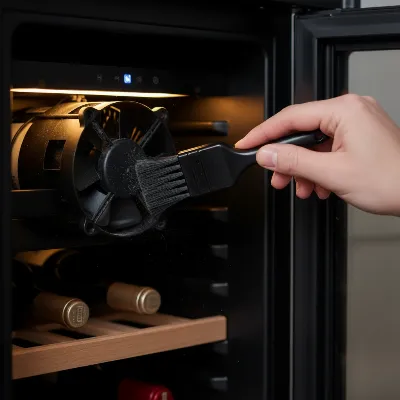 A person carefully cleaning the interior fan of a wine cooler with a soft brush, highlighting the removal of dust for noise reduction.
Tighten Up: Loose Components
Vibrations can cause screws and panels to loosen over time, leading to irritating rattles and buzzes.
- Inspect panels and screws: Carefully check the exterior back panel, side panels, and any internal panels for loose screws.
- Tighten: Use a screwdriver to securely tighten any loose fasteners. Be careful not to overtighten.
- Check shelves and racks: Ensure all wine racks and shelves are correctly seated and stable. If they have any play, they might rattle. Some units allow for adjustments or can be stabilized with small foam pieces.
- Reposition compressor (compressor models): For compressor units, inspect the compressor itself. It’s typically mounted on rubber grommets or pads to absorb vibrations. During transport or over time, it might have shifted and could be touching the metal frame or other components. If safe to do so, gently reposition the compressor back to the center of its rubber mounts, ensuring it’s not making direct contact with any fixed parts of the cooler.
Optimize Bottle Arrangement
Even your wine bottles can contribute to noise if not stored correctly.
- Ensure airflow: Arrange bottles so they don’t block internal vents or impede the circulation of air by the evaporator fan.
- Prevent contact: Make sure bottles are not touching the interior walls of the cooler, the door, or other bottles, as this can create rattling or vibration noises.
- Avoid overloading: An overloaded wine cooler forces its cooling system to work harder, potentially leading to increased noise.
Selecting a Quiet Wine Cooler: Factors for Future Purchases
If you’re in the market for a new wine cooler, consider these factors to minimize future noise concerns.
Decibel Levels (dB)
Always check the product specifications for the decibel rating. Aim for models with lower dB levels, ideally below 40 dB, especially if the cooler will be in a living area or kitchen.
Cooling Technology
- Thermoelectric: Generally quieter due to the absence of a compressor, relying mainly on fan noise. However, they are less powerful and perform best in cooler ambient temperatures.
- Compressor-based: While historically noisier, many modern compressor models feature advanced vibration-dampening technology and quiet compressors, making them a viable quiet option.
Ventilation Requirements
- Freestanding vs. Built-in: Built-in units often require specific clearances for front ventilation. Ensure the model you choose is designed for your intended installation, as inadequate ventilation is a leading cause of overheating and noise.
- Optimal Placement: Think about where the cooler will live. A unit in a dedicated wine cellar or basement will have less impact on household noise than one in an open-plan kitchen.
Build Quality
A robust, well-constructed cabinet with good insulation will not only be more energy-efficient but also better at containing operational sounds. Look for solid doors, sturdy shelving, and quality components.
Top Quiet Wine Cooler Features
When researching new wine coolers, look for these features that contribute to a quieter operation:
- Vibration-Dampening Systems: High-end compressor models often feature compressors mounted on advanced rubber or silicone dampeners, minimizing the transfer of vibrations to the cabinet.
- Quiet Fan Technology: Manufacturers increasingly incorporate high-quality, low-noise fans designed for whisper-quiet operation.
- Solid Cabinet Construction: A heavier, more rigid cabinet construction reduces resonance and helps absorb sound.
- Advanced Insulation: Good insulation not only maintains stable temperatures but also acts as an effective sound barrier, keeping operational noises contained within the unit.
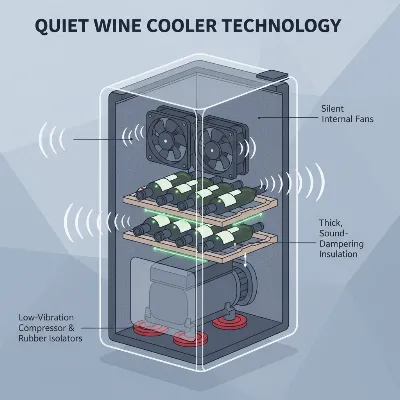 Illustrative diagram showing key features of a quiet wine cooler, including vibration-dampening compressor mounts and quiet fan technology.
Long-Term Care: Preventing Noise Issues
Consistent maintenance is your best defense against a noisy wine cooler. A few simple habits can keep your unit running quietly and efficiently for years.
- Regular Cleaning: Make it a routine to clean the internal and condenser fans, as well as the condenser coils, every 3-6 months. More frequent cleaning may be necessary if you have pets or a dusty environment.
- Periodic Re-leveling: Over time, floors can settle or units can shift. Check your wine cooler’s level periodically and adjust the feet as needed to maintain stability.
- Maintain Ventilation: Always ensure the required clearance around your wine cooler (especially built-in models) is maintained. Avoid placing items that block vents.
- Avoid Overloading: Do not pack your wine cooler beyond its recommended capacity. This strains the cooling system and can lead to increased noise.
- Listen for Changes: Pay attention to any new or unusual sounds. Early detection of a developing issue can prevent it from escalating into a larger, noisier problem.
“Routine maintenance is the best way to avoid a noisy cooler. Vacuum and wipe dust from vents and fans every 3–6 months. This simple step can make a significant difference.” – WineStorage HQ
Conclusion
A noisy wine cooler doesn’t have to be a permanent fixture in your home. By understanding the common causes of excessive sound and applying these straightforward DIY troubleshooting steps, you can often restore peace and quiet to your living space. From ensuring your unit is level and well-ventilated to diligently cleaning its fans and coils, proactive maintenance is key to both noise reduction and extending your wine cooler’s lifespan. Don’t let a disruptive hum detract from your wine experience; empower yourself to identify and fix these issues with confidence. What steps will you take today to restore tranquility to your wine collection?
Frequently Asked Questions
Should a wine cooler be completely silent?
No, a wine cooler is not designed to be completely silent. All operational appliances, especially those with compressors and fans, generate some level of noise. A normal wine cooler typically operates between 35-45 decibels, which is similar to a quiet library.
How often should I clean my wine cooler’s fan and condenser coils?
It is recommended to clean your wine cooler’s internal and condenser fans and coils every 3 to 6 months. If you have pets that shed a lot of hair or live in a particularly dusty environment, more frequent cleaning may be beneficial.
Can I use vibration pads to reduce wine cooler noise?
Yes, placing anti-vibration pads or mats under your wine cooler can be an effective way to reduce noise caused by vibrations, especially if the unit is on a hard floor. These pads help absorb and dampen mechanical vibrations before they can resonate and amplify.
Is a thermoelectric wine cooler always quieter than a compressor model?
Thermoelectric wine coolers are generally quieter than compressor models because they do not have a compressor, eliminating a major source of vibration and hum. However, they still have fans that can generate noise, especially if they are working hard in a warm room or are clogged with dust.
When should I consider replacing a noisy wine cooler?
You should consider replacing a noisy Wine Cooler if, after performing all DIY troubleshooting and maintenance, the noise persists and is indicative of a failing major component like the compressor or motor. Professional repair costs for such parts can sometimes approach the price of a new, more energy-efficient, and quieter unit.