For the discerning wine collector, a simple refrigerator simply won’t do. True connoisseurs understand that preserving the delicate nuances of a fine vintage requires a dedicated environment, one precisely calibrated to protect against the enemies of wine: improper temperature, fluctuating humidity, harmful UV light, and even subtle vibrations. A large capacity wine cooler isn’t just an appliance; it’s a vital investment in your collection’s longevity and enjoyment, ensuring every bottle matures gracefully and is ready to be savored at its peak. This comprehensive guide will navigate you through the world of high-capacity wine storage, helping you uncover the ideal solution that marries advanced technology with sophisticated design, tailored specifically for the serious collector.
What is a Wine Cooler? Why Do True Collectors Need One?
A wine cooler, often referred to as a wine refrigerator or wine cellar, is an appliance specifically engineered to store wine under optimal conditions. Unlike a standard kitchen refrigerator, which operates at temperatures too cold and humidity levels too low for wine, a dedicated wine cooler maintains a stable temperature range (typically 45-65°F or 7-18°C) and consistent humidity, typically between 50-80%. These precise controls are critical because extreme heat or cold can prematurely age wine or strip it of its complex flavors and aromas.
For true collectors, a wine cooler offers significant advantages. It shields wine from damaging UV rays through specialized glass or solid doors, preventing light strike that can “cook” the wine. Advanced models incorporate vibration-dampening systems, crucial for preventing sediment disturbance that can prematurely age wine. Furthermore, features like charcoal air filters protect corks from drying out and prevent undesirable odors from permeating the bottles. For those building a diverse cellar, a large capacity wine cooler isn’t merely convenient; it’s an essential guardian for their valuable liquid assets, preserving both immediate serving readiness and long-term aging potential.
Classifying Wine Coolers: Finding Your Perfect Match
Wine coolers come in various forms, each designed to meet different needs and integrate into diverse spaces. Understanding these classifications is the first step in selecting the ideal unit for your cherished collection.
By Size and Capacity: Catering to Your Collection’s Scale
The capacity of a wine cooler is typically measured in standard 750mL Bordeaux bottles. However, remember that wider bottles (like Pinot Noir or Champagne) may reduce the actual capacity. It’s often recommended to purchase a cooler with 25-50% more capacity than your current collection to accommodate future growth.
- Mini and Compact Wine Coolers (Under 30 bottles): While not the primary focus for large collections, these are suitable for beginners or those with limited space, keeping a small selection ready for immediate consumption.
- Medium-Capacity Wine Coolers (30-50 bottles): A step up, these offer more substantial storage, ideal for growing collections that require more dedicated space than a few bottles on the counter.
- Large Capacity Wine Coolers (Over 50 bottles): This is where true collectors find their stride. Units holding 70, 80, 146, or even 250 bottles provide ample space for aging, displaying, and organizing an extensive collection. These are designed to be long-term storage solutions, often becoming focal points in dedicated wine rooms or sophisticated living areas.
|
Our Picks for the Best Wine Cooler in 2026
As an Amazon Associate I earn from qualifying purchases.
|
||
| Num | Product | Action |
|---|---|---|
| 1 | Cuisinart CWC-800CEN 8-Bottle Private Reserve Wine Cellar |

|
| 2 | BLACK+DECKER BD60026 Wine Cellar with LED Display (8-Bottle Capacity) |
|
| 3 | Ivation 12 Bottle Red And White Wine Thermoelectric Wine Cooler/Chiller Counter Top Wine Cellar with Digital Temperature Display, Freestanding Refrigerator Smoked Glass Door Quiet Operation Fridge |
|
| 4 | Ivation Premium Stainless Steel 8 Bottle Horizontal Thermoelectric Wine Cooler/Chiller Counter Top Red & White Wine Cellar w/Digital Temperature, Freestanding Refrigerator Quiet Operation Fridge |
|
| 5 | Ivation Premium 6 Bottle Horizontal Thermoelectric Wine Cooler/Chiller Counter Top Red & White Wine Cellar w/Digital Temperature, Freestanding Refrigerator Quiet Operation Fridge |
|
| 6 | Ivation 12 Bottle Compressor Wine Cooler Refrigerator w/Lock, Large Freestanding Wine Cellar Fridge, 41f-64f Digital Temperature Control Glass Door Black |
|
| 7 | BLACK+DECKER Wine Fridge 12 Bottles, Thermoelectric Wine Cooler Refrigerator with Mirrored Front, Freestanding 12 Bottle Wine Fridge, BD60336 |
|
| 8 | Wine Enthusiast 32-Bottle Dual Zone MAX Compressor Wine Cooler – Freestanding Mini Fridge with Digital Touchscreen, LED Display, Split Storage for Red & White Wines, Matte Black Refrigerator Home Bar |
|
| 9 | BLACK+DECKER Wine Cooler 8 Bottle,Wine Fridge Thermoelectric with Mirrored Front,Freestanding Wine Cooler Refrigerator &LED Display,BD60326 |
|
| 10 | Wine Enthusiast 6-Bottle Countertop Wine Cooler – Compact Mini Fridge for Kitchen or Bedroom with 3 Shelves, Energy-Efficient Cooling, Adjustable Digital Temperature Control |
|
By Cooling Mechanism: Compressor vs. Thermoelectric
The heart of any wine cooler is its cooling system, and the two main types—compressor and thermoelectric—offer distinct advantages.
- Compressor-Based Wine Coolers: These operate much like a standard refrigerator, using a compressor, refrigerant, and condenser coils to cool the interior.
- Pros: Highly efficient, powerful, and capable of maintaining consistent temperatures even in warmer ambient environments (like a garage or basement). They are the preferred choice for large capacity units and environments with fluctuating room temperatures.
- Cons: Can produce some noise and vibration, although many modern designs incorporate vibration-dampening technology to mitigate this.
- Thermoelectric Wine Coolers: These utilize the Peltier effect, where an electric current passes through two different materials, creating a temperature differential.
- Pros: Virtually silent and vibration-free, making them extremely gentle on aging wines. They are often lighter and more compact.
- Cons: Less powerful, typically only able to cool to about 20°F below the ambient room temperature. Best suited for smaller units (under 30 bottles) placed in climate-controlled rooms where ambient temperatures are stable and not too high. Not ideal for large collections or hot environments.
By Installation Type: Freestanding vs. Built-in
How a wine cooler integrates into your home décor is an important consideration for aesthetics and functionality.
- Freestanding Wine Coolers: These units are designed to stand alone, with finished sides and sufficient clearance for ventilation around all sides. They offer flexibility in placement and are often chosen for dedicated wine rooms or as standalone pieces of furniture.
- Built-in or Under-counter Wine Coolers: Designed to be seamlessly integrated into existing cabinetry or under countertops, these models feature front-venting systems that allow them to be enclosed without overheating. Panel-ready options are available, allowing you to match the cooler’s door panel to your kitchen or bar cabinetry for a truly custom look.
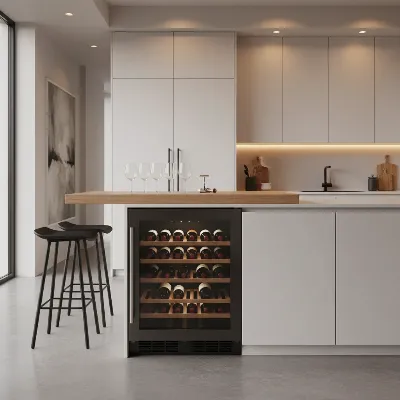 A sophisticated large capacity wine cooler built into a modern kitchen island, showcasing various wine bottles.
Comparison Chart for Wine Cooler Types
Choosing the right wine cooler involves weighing various factors. This table provides a quick comparison to help guide your decision.
| Feature | Compressor-Based Coolers | Thermoelectric Coolers |
|---|---|---|
| Cooling Power | Strong, effective in varied ambient temperatures | Limited, cools ~20°F below ambient, needs climate control |
| Noise & Vibration | Can be present, but often dampened in modern units | Virtually silent and vibration-free |
| Capacity | Ideal for large capacity units (50+ bottles) | Best for smaller units (under 30 bottles) |
| Energy Efficiency | Generally more energy-efficient for large volumes | Less efficient for larger volumes or warm environments |
| Cost | Often higher for large, feature-rich models | Generally lower for smaller units |
| Durability | Robust, long-lasting with proper maintenance | Can have a shorter lifespan compared to compressor units |
Key Factors to Consider When Buying a Large Capacity Wine Cooler
For true collectors, selecting a large capacity wine cooler goes beyond mere storage; it’s about safeguarding an investment and enhancing the wine experience. Here are the critical factors to scrutinize.
Capacity and Bottle Quantity
Always size up. If your collection is currently 50 bottles, consider a cooler that holds 70-100. This foresight prevents the need for a second unit later. Keep in mind that advertised capacities are typically for standard Bordeaux bottles. If your collection includes a variety of bottle shapes (e.g., wider Pinot Noir or Champagne bottles), the actual number of bottles you can store will be slightly less. Look for adjustable or sliding shelves that can accommodate different bottle sizes.
Temperature Range and Control
Precision is paramount. Look for models offering a consistent and accurate temperature range, ideally between 41°F and 68°F.
- Dual-Zone: This is a must-have for collectors who enjoy both red and white wines. Dual-zone coolers allow you to set two independent temperature zones, typically around 45°F for chilled whites and 60°F for cellar-temperature reds or long-term aging. This ensures every bottle is served or stored at its optimal temperature.
- Single-Zone: While less versatile, a single-zone cooler is perfect if you primarily collect one type of wine or are solely focused on long-term aging at a consistent cellar temperature (e.g., 55-57°F).
Humidity Control
Beyond temperature, humidity is critical for long-term storage. Low humidity can dry out corks, allowing air to seep in and spoil the wine. High humidity can lead to mold and damage labels. Look for models that actively monitor and regulate humidity levels, keeping them within the ideal 50-80% range. Some high-end units include humidity cassettes or hygrometers for autonomous regulation.
Noise Level and Vibration Dampening
A quiet cooler is a happy cooler, especially if it’s in a living area. Compressor-based units can generate some noise and vibration. However, many premium large capacity wine coolers incorporate advanced vibration-dampening systems to minimize any disturbance to the wine, which is crucial for preventing sediment agitation and ensuring proper aging. Thermoelectric units are inherently silent and vibration-free but lack the capacity and cooling power for extensive collections.
Energy Efficiency
A large appliance running 24/7 can impact your utility bill. Look for models with good energy efficiency ratings. Features like insulated doors (triple-pane glass or solid doors) and efficient compressors contribute to lower energy consumption.
Design and Aesthetics
A wine cooler should complement your home’s décor. Consider its installation type (freestanding, built-in, or integrated/panel-ready), door type (glass for display, solid for maximum UV protection), and interior lighting (LED, amber). High-end models often feature elegant wood-trimmed shelves, stainless steel finishes, and sophisticated lighting that showcases your collection beautifully.
Additional Features
- UV Protection: Essential for glass doors. Look for UV-resistant or triple-pane glass to block harmful light. Opaque doors offer ultimate protection for long-term aging.
- Air Filtration: Charcoal filters purify the air, preventing odors from contaminating the wine through the cork.
- Security Lock: A lock and key provide peace of mind for valuable collections.
- Smart Technology: Wi-Fi connectivity and dedicated apps allow you to monitor and adjust temperatures remotely, manage your inventory with photos and notes, and receive alerts.
- Shelving Quality: Smooth-gliding, full-extension, or soft-close shelves made of beechwood or similar materials are gentle on bottles and make access easy. Adjustable supports are a bonus for varied bottle sizes.
Budget
Large capacity wine coolers for true collectors represent a significant investment, ranging from a few hundred to several thousand dollars. While it’s tempting to opt for a cheaper model, remember that quality and features directly correlate with price. Investing in a reputable brand with advanced technology will ultimately protect your wine more effectively and last longer.
Top Large Capacity Wine Coolers for True Collectors
For the serious collector, certain brands and models stand out due to their superior performance, capacity, and specialized features.
1. Sub-Zero Classic Series 30″ Wine Cooler (Approx. 146 Bottles)
This unit is often lauded as a top-tier choice for serious collectors. It boasts a substantial 146-bottle capacity and features dual-zone temperature control, allowing for precise storage of reds and whites. Its UV-resistant glass door protects wine from harmful light, while Wi-Fi connectivity enables remote monitoring and temperature adjustments via a smartphone app. Sub-Zero is renowned for its robust build quality and longevity.
2. Wine Enthusiast Classic 250-Bottle Wine Vault (250 Bottles)
Designed for extreme conditions, this freestanding wine vault is perfect for collectors living in warmer climates or those needing storage in areas like a garage. It can protect wine in ambient temperatures ranging from 50 to 100 degrees Fahrenheit. Key features include a solid insulated door for maximum protection, a charcoal filter to eliminate odors, and sturdy beechwood shelves accommodating various bottle types and sizes.
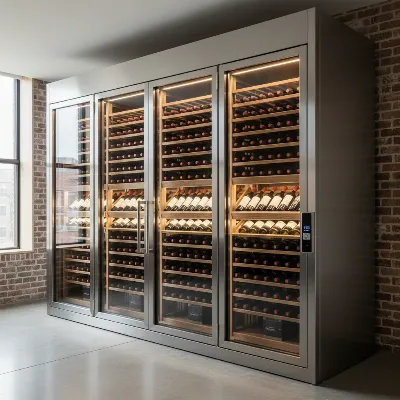 A grand wine vault filled with wine bottles, showcasing organized storage in a temperature-controlled environment.
3. EuroCave Royale / Revelation L / La Première Wine Cellars (74-200+ Bottles)
EuroCave is synonymous with luxury and unparalleled wine preservation, often found in Michelin-starred restaurants. The EuroCave Royale is considered the “Rolls Royce” of wine coolers, offering autonomous humidity and temperature regulation with an astonishing precision of +/- 0.3 degrees. It features shock-absorbing footings, self-closing doors, full-cabinet amber lighting, and independently lit shelves, all housed within a beautifully handcrafted cabinet. The Revelation L offers advanced climate control, thermal-insulated walls, a circulation fan, and soft-close “Main du Sommelier” sliding shelves that accommodate all bottle sizes. The La Première model, often holding around 74 bottles, is notable for its opaque door, providing superior UV protection crucial for long-term aging. These units are built for showcasing and protecting high-value collections.
4. Signature Kitchen Suite 24″ Panel Ready Wine Cooler (Approx. 41 Bottles)
While slightly smaller in capacity for some large collections, this built-in unit is perfect for those seeking seamless integration with precise control. It offers dual-zone storage, triple-pane glass doors for UV protection, and advanced humidity control. The Signature Sommelier™ app is a standout feature, helping collectors manage their inventory with photos, labels, and notes. Its panel-ready design allows for a custom kitchen aesthetic.
5. Wine Enthusiast Classic 70 Dual-Zone Wine Cellar (70 Bottles)
This reliable dual-zone cooler offers a good balance of capacity and features for many collectors. It provides a wide temperature range suitable for both short-term serving and long-term aging. Reviewers often praise its streamlined setup, quiet performance, and elegant, understated design, making it a strong contender for those needing dependable storage without the ultra-luxury price tag of a EuroCave.
Guide to Using and Maintaining Your Wine Cooler Correctly
Owning a large capacity wine cooler is just the first step; proper usage and diligent maintenance are crucial to ensure your collection remains perfectly preserved for years to come.
Initial Setup and Temperature Adjustment
Upon installation, allow your wine cooler to sit upright for several hours (as per manufacturer guidelines) before plugging it in to let the compressor oils settle. Once powered, let it run empty for at least 24 hours to stabilize temperatures. Set your desired temperature zones based on your collection: typically, 45-55°F (7-13°C) for white and sparkling wines, and 55-65°F (13-18°C) for red wines. For long-term aging of all wines, a consistent 55°F (13°C) is often recommended. Use the cooler’s internal controls or smart app to fine-tune settings.
Arranging Wine Bottles
Strategic arrangement can maximize space and ensure optimal air circulation.
- Heavy bottles on lower shelves: This adds stability and prevents potential tipping.
- Horizontal storage: Always store corked bottles horizontally to keep the cork moist, preventing it from drying out and allowing air ingress. Screw-cap or synthetic cork bottles can be stored vertically if space is tight, though horizontal storage is generally preferred for consistency.
- Grouping by type: Organize by varietal, region, or ready-to-drink vs. aging potential for easier access.
- Avoid overcrowding: Leave some space between bottles and shelves for proper air circulation, which helps maintain consistent temperatures throughout the unit.
Regular Cleaning and Maintenance
Consistent care extends the life of your wine cooler and protects your wine.
- Interior Cleaning: Every few months, gently wipe down the interior with a mild, odorless cleaner (like baking soda dissolved in water) and a soft cloth. Ensure the unit is unplugged beforehand. Avoid harsh chemicals that could leave lingering odors.
- Charcoal Filter Replacement: If your cooler has a charcoal air filter, replace it every 3-6 months as recommended by the manufacturer. This prevents unpleasant odors from affecting your wine.
- Door Seal Check: Regularly inspect the door gasket for cracks or damage. A tight seal is vital for maintaining temperature and humidity. Clean it gently with warm, soapy water.
- Condenser Coil Cleaning (Compressor models): For compressor units, the condenser coils can accumulate dust, reducing efficiency. Consult your manual for safe cleaning instructions, which usually involve gently vacuuming or brushing away dust from the coils located at the back or bottom of the unit. This typically needs to be done once or twice a year.
- Defrosting: Some older or less advanced models may require manual defrosting if ice builds up. Newer models often have auto-defrost features.
Important Tips for Longevity
- Location: Place your wine cooler in a stable environment, away from direct sunlight, heat sources (ovens, radiators), and areas with extreme temperature fluctuations.
- Ventilation: Ensure adequate space around the unit, especially for freestanding models, to allow for proper heat dissipation. For built-in units, confirm the front-venting system is unobstructed.
- Minimize Door Openings: Each time the door is opened, temperature and humidity fluctuate. Plan your selections to minimize frequent access.
- Leveling: Ensure the unit is perfectly level to allow the door to seal properly and for the cooling system to operate efficiently.
Following these guidelines will help ensure your large capacity wine cooler performs optimally, providing the perfect sanctuary for your prized wine collection.
Conclusion
Investing in a large capacity wine cooler is a clear statement of dedication for any true collector. It’s an indispensable tool that transcends mere storage, becoming the ultimate guardian of your wine’s integrity, flavor, and aging potential. From the robust power of compressor cooling and the precise control of dual temperature zones to essential features like UV protection and humidity management, the right wine cooler provides a stable, protected environment unmatched by any standard refrigerator. By carefully considering capacity, cooling technology, design, and crucial features, you can select a unit that not only safeguards your treasured bottles but also elegantly showcases your passion for wine.
What specific characteristics do you value most in a wine cooler for preserving your most cherished vintages?
Frequently Asked Questions
What capacity do I really need for a serious wine collection?
It’s generally recommended to purchase a wine cooler with 25-50% more capacity than your current collection. This foresight allows for growth and the acquisition of new bottles without immediately needing a second unit. For serious collectors, capacities of 70 bottles and up are common.
Are dual-zone wine coolers essential for collectors?
Yes, for most serious collectors who enjoy both red and white wines, a dual-zone cooler is highly recommended. It allows you to maintain separate optimal temperatures for different wine types, ensuring both serving readiness and proper long-term storage conditions without compromise.
How important is humidity control in a wine cooler?
Humidity control is very important, especially for long-term aging of wines sealed with natural corks. Proper humidity (typically 50-80%) prevents corks from drying out and shrinking, which could allow oxygen to prematurely spoil the wine. Many high-end large capacity models include active humidity regulation.
What is the lifespan of a quality large capacity wine cooler?
The lifespan of a wine cooler varies widely based on brand, quality, and maintenance. High-quality compressor-based units from reputable brands, particularly those designed for collectors, can last 10-15 years or even longer with proper care and regular maintenance, such as cleaning coils and replacing air filters.
Can I store different bottle sizes in a large wine cooler?
Most large capacity Wine Coolers are designed with standard 750mL Bordeaux bottles in mind. However, many premium models feature adjustable or full-extension shelves made of wood or metal that can accommodate various bottle shapes and sizes, including wider Pinot Noir or Champagne bottles. Always check the specific shelf design and adjustability for your collection’s needs.