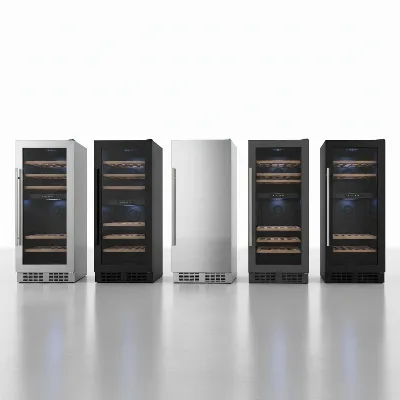
For wine enthusiasts and casual sippers alike, a dedicated wine cooler is an indispensable addition to any home bar. Beyond merely chilling bottles, these specialized appliances create optimal conditions for preserving the complex flavors and aromas of your cherished collection. In 2026, the market offers an impressive array of freestanding wine coolers, perfect for those seeking flexibility in placement without compromising on performance. Whether you’re curating a small, everyday selection or expanding a diverse assortment, understanding the nuances of these units is key to making an informed choice. This guide will navigate the world of freestanding wine coolers, ensuring you select a model that perfectly aligns with your needs and enhances your home bar experience.
What is a Wine Cooler? Why Do You Need One?
A wine cooler, often referred to as a wine fridge or cellar, is a specialized appliance designed to store wine at its ideal temperature and humidity, offering a controlled environment that regular refrigerators cannot match. Unlike standard kitchen fridges that operate at much lower temperatures (typically 33-40°F) and low humidity to preserve food, wine coolers maintain a stable range between 40-65°F and a humidity level of 50-70%. This precise control is crucial because fluctuating temperatures, low humidity, excessive vibration, and harmful UV light can rapidly degrade wine, drying out corks and accelerating unwanted chemical reactions. Investing in a wine cooler protects your bottles from these detrimental elements, ensuring each pour is as enjoyable as the winemaker intended.
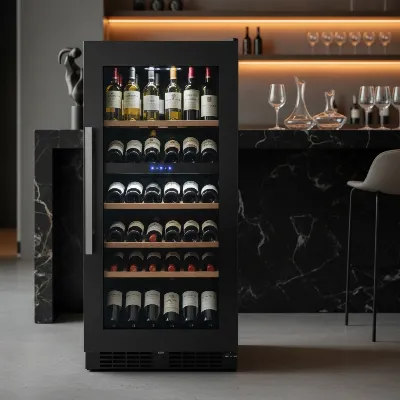 Modern freestanding wine cooler with elegant glass door and interior LED lighting showcasing various wine bottles in a stylish home bar setting
Types of Freestanding Wine Coolers: Which One Suits Your Home Bar?
Freestanding wine coolers offer remarkable versatility, designed to operate independently and be placed almost anywhere with proper ventilation. This flexibility makes them a popular choice for home bars, dining rooms, or even an elegant corner in a living space. Understanding the different classifications by size, cooling mechanism, and unique freestanding characteristics will help tailor your selection to your specific collection and lifestyle.
By Size and Capacity
The capacity of a wine cooler is typically measured in standard 750ml Bordeaux-style bottles, though actual capacity can vary with different bottle shapes. It’s often wise to choose a unit with about 25% more capacity than your current collection to accommodate future growth.
- Mini/Countertop Wine Coolers (4-20 bottles): These compact units are ideal for casual drinkers or those with limited space, perfect for keeping a few favorite bottles at the ready. They fit easily on a countertop or small bar area.
- Small Wine Coolers (20-39 bottles): Stepping up in capacity, these are great for enthusiasts who enjoy a larger selection or host frequent gatherings, often accommodating slightly larger or uniquely shaped bottles.
- Medium Wine Coolers (40-99 bottles): For the more dedicated collector, these units are excellent for aging wines or maintaining a diverse selection for entertaining. Many in this range feature dual temperature zones.
- Large Wine Coolers (100+ bottles): Designed for serious collectors, these impressive units offer extensive storage and often include multiple temperature zones and advanced humidity controls for optimal long-term preservation.
|
Our Picks for the Best Wine Cooler in 2026
As an Amazon Associate I earn from qualifying purchases.
|
||
| Num | Product | Action |
|---|---|---|
| 1 | Ivation Premium 6 Bottle Horizontal Thermoelectric Wine Cooler/Chiller Counter Top Red & White Wine Cellar w/Digital Temperature, Freestanding Refrigerator Quiet Operation Fridge |

|
| 2 | Ivation 12 Bottle Red And White Wine Thermoelectric Wine Cooler/Chiller Counter Top Wine Cellar with Digital Temperature Display, Freestanding Refrigerator Smoked Glass Door Quiet Operation Fridge |
|
| 3 | Wine Enthusiast 32-Bottle Dual Zone MAX Compressor Wine Cooler – Freestanding Mini Fridge with Digital Touchscreen, LED Display, Split Storage for Red & White Wines, Matte Black Refrigerator Home Bar |
|
| 4 | Cuisinart CWC-800CEN 8-Bottle Private Reserve Wine Cellar |
|
| 5 | BLACK+DECKER Wine Cooler 8 Bottle,Wine Fridge Thermoelectric with Mirrored Front,Freestanding Wine Cooler Refrigerator &LED Display,BD60326 |
|
| 6 | Ivation 12 Bottle Compressor Wine Cooler Refrigerator w/Lock, Large Freestanding Wine Cellar Fridge, 41f-64f Digital Temperature Control Glass Door Black |
|
| 7 | Ivation Premium Stainless Steel 8 Bottle Horizontal Thermoelectric Wine Cooler/Chiller Counter Top Red & White Wine Cellar w/Digital Temperature, Freestanding Refrigerator Quiet Operation Fridge |
|
| 8 | BLACK+DECKER BD60026 Wine Cellar with LED Display (8-Bottle Capacity) |
|
| 9 | BLACK+DECKER Wine Fridge 12 Bottles, Thermoelectric Wine Cooler Refrigerator with Mirrored Front, Freestanding 12 Bottle Wine Fridge, BD60336 |
|
| 10 | Wine Enthusiast 6-Bottle Countertop Wine Cooler – Compact Mini Fridge for Kitchen or Bedroom with 3 Shelves, Energy-Efficient Cooling, Adjustable Digital Temperature Control |
|
By Cooling Mechanism
The cooling technology significantly impacts a wine cooler’s performance, noise, and energy consumption.
- Compressor-Based Wine Coolers: These operate much like a standard refrigerator, using a refrigerant and a compressor to cool. They are powerful, capable of reaching lower temperatures more efficiently, and perform well in warmer ambient environments. Compressor units are typically favored for larger collections due to their robust cooling capacity, though they might produce slight vibrations and some noise. Many modern compressors, however, are designed with vibration-dampening features and quieter operation in mind.
- Thermoelectric Wine Coolers: Utilizing a Peltier effect, these units cool without a compressor, resulting in virtually silent and vibration-free operation. This makes them ideal for delicate wines and placements in quiet living areas. However, thermoelectric coolers have limited cooling power, generally cooling to about 20°F below the ambient room temperature, and are best suited for smaller units (under 30 bottles) in climate-controlled environments.
By Style
While this guide focuses on freestanding units, it’s important to differentiate. Freestanding wine coolers are self-contained appliances that vent heat from the rear or sides, requiring adequate clearance (typically 2-3 inches on sides and 12 inches on top) for proper airflow. This design allows for flexible placement anywhere in your home, making them easily portable and a great choice if you prioritize adaptability. Their aesthetic appeal and functionality make them valuable to any wine collector’s arsenal.
Comparison Table of Freestanding Wine Coolers
Choosing the right wine cooler involves weighing the benefits and drawbacks of different types. Below is a comparison to help clarify which characteristics best align with your home bar setup.
| Feature | Freestanding (Thermoelectric) | Freestanding (Compressor) |
|---|---|---|
| Cost | Generally lower initial purchase cost | Higher purchase cost |
| Bottle Capacity | Ideal for small collections (under 30 bottles) | Suitable for small to large collections (up to 100+ bottles) |
| Noise Level | Whisper quiet (no moving parts) | Comparable to a standard refrigerator (some noise/hum) |
| Vibration | Virtually zero vibration (ideal for aging) | Minimal vibration (dampened in modern units) |
| Cooling Power | Limited; cools ~20°F below ambient temperature | Powerful; reaches lower temperatures, less affected by ambient heat |
| Energy Efficiency | Efficient for small units, but runs continuously | Efficient for larger units, cycles on/off as needed |
| Placement | Flexible, but performs best in climate-controlled rooms | Flexible, suitable for various ambient temperatures |
| Lifespan | Generally shorter than compressor units | Generally longer lifespan |
| Best For | Quiet areas, small collections, short-term storage, delicate wines | Larger collections, varied environments, long-term aging |
Factors to Consider When Buying a Freestanding Wine Cooler
Selecting the perfect freestanding wine cooler involves evaluating several critical factors to ensure it meets both your functional requirements and aesthetic preferences. A thoughtful purchase today means years of perfectly preserved wine for your home bar.
Capacity and Bottle Count
Consider not only your current wine collection but also how it might grow in the future. Many experts recommend purchasing a cooler with at least 25% more capacity than you currently need. Remember that stated capacities are often based on standard Bordeaux bottles, and larger or irregularly shaped bottles (like Pinot Noir or Champagne) may reduce the actual storage space. Think about your typical consumption habits: do you often have a dozen bottles on hand, or are you building a cellar for decades?
Temperature Range and Control
The ideal storage temperature for all wines is around 55°F (13°C), though serving temperatures vary. Red wines are often best at 60-68°F, while whites and sparkling wines prefer 45-55°F.
> “For optimal preservation, look for a wine cooler that offers precise, adjustable temperature settings and, ideally, dual-zone capabilities if you plan to store both red and white wines simultaneously.”
Single-zone coolers maintain one consistent temperature, perfect if you primarily collect one type of wine. Dual-zone models feature two separate compartments, each with independent temperature controls, offering versatility for diverse collections. Ensure the controls are easy to access, ideally without opening the door.
Noise Level
Since freestanding units are often placed in living areas, the noise level is a significant consideration. Thermoelectric coolers are virtually silent due to fewer moving parts, making them excellent for quiet environments. Compressor-based models have become much quieter over the years, with many units rated below 40dB for unobtrusive operation. Check manufacturer specifications for decibel ratings, especially if your home bar is integrated into an open-plan living space.
Energy Efficiency
An energy-efficient wine cooler saves money on utility bills and reduces environmental impact. Look for models with an Energy Star rating or features like advanced insulation and efficient compressor technology. While thermoelectric units consume less power initially, compressor units often cycle on and off, which can be more energy-efficient for larger capacities and in varying ambient temperatures. Proper placement away from direct sunlight and heat sources also contributes to lower energy consumption.
Design and Aesthetics
A freestanding wine cooler is a prominent feature in your home bar, so its design should complement your existing décor. Options range from sleek stainless steel and sophisticated black finishes to models with elegant wooden shelves and clear glass doors. UV-resistant, double-paned glass doors are crucial to protect wine from harmful light while allowing you to showcase your collection. Interior LED lighting adds to the display without emitting heat that could affect wine quality. Consider reversible door hinges for flexible placement.
Additional Features
Modern wine coolers come with a host of features that enhance convenience and protection:
- Vibration Dampening: Essential for wine preservation, as excessive vibration can disturb sediment. Look for sturdy shelving (often wood, which absorbs vibrations better than wire racks) and advanced compressor technology designed for minimal shake.
- Humidity Control: While many units passively maintain humidity, some offer active control to keep the ideal 50-70% range, preventing corks from drying out.
- Security Lock: Useful for protecting valuable collections or for households with children.
- Adjustable/Removable Shelving: Allows for accommodating different bottle sizes, from standard Bordeaux to larger Champagne bottles.
Budget
Wine coolers are available across a wide price spectrum, from budget-friendly countertop models to high-end, large-capacity units. Set a realistic budget based on your desired features, capacity, and the value of your wine collection. While investing in a quality unit is important for long-term preservation, numerous reliable options exist at various price points. Prioritize the features most important to your storage needs and explore models within that range for the best value.
Top 5 Freestanding Wine Coolers for Home Bars in 2026
The market for freestanding wine coolers is vibrant, with manufacturers constantly innovating to offer better performance, aesthetics, and features. Here are five top-rated models that stand out for home bar enthusiasts in 2026, offering a range of capacities and technologies to suit various needs.
-
Wine Enthusiast 32-Bottle Dual Zone MAX Compressor Wine Cooler
- Description: Our top overall pick, this compressor-based unit is a favorite for its advanced technology and exceptional design, perfect for both red and white wines. It features dual-zone cooling, allowing precise temperature control (41-64°F) for different varietals. The MAX compressor technology aims to preserve wine up to twice as long as standard methods, offering quieter, more energy-efficient operation with minimal temperature fluctuations. It boasts a 32-bottle capacity with sleek, wavy chrome shelving for easy organization and a digital touchscreen for effortless temperature adjustment. Blue LED lighting elegantly showcases your collection.
- Pros: Dual-zone flexibility, advanced compressor for stability, low vibration, appealing design, electronic touch controls.
- Cons: Higher price point, chrome shelves may not absorb vibration as well as wood.
-
Ivation 28-Bottle Single Zone Freestanding Wine Fridge
- Description: Recognized for its excellent value and user-friendly features, this slim compressor wine cooler is ideal for those needing efficient storage in narrow spaces. It maintains a stable temperature range of 41-64°F, optimal for aging and serving. Features include wooden shelves, easy installation, UV-resistant glass, and vibration-free operation.
- Pros: Good value, slim design, temperature stability, wooden shelves, removable racks, UV-resistant glass.
- Cons: Single zone only, smaller capacity.
-
Danby 36-Bottle Free-Standing Wine Cooler
- Description: A superb value option, the Danby 36-Bottle unit combines functionality with aesthetic appeal. Its platinum trim and sleek design complement any room. A notable feature is the reversible door swing, allowing it to open from either the left or right, enhancing placement flexibility. It includes six full-size black wire shelves and two half shelves for displaying special vintages, illuminated by blue LED lighting.
- Pros: Great value, reversible door, stylish appearance, good capacity for its class.
- Cons: Single zone, wire shelves (less vibration absorption than wood).
-
Kalamera 50-Bottle Wine Cooler
- Description: For those with a sizeable collection, the Kalamera 50-Bottle cooler is an excellent choice. This stainless-steel trimmed fridge features beechwood shelving, a double-paned glass door for UV protection, and a touch control panel for temperature settings between 40°F and 65°F. Its door swing is also reversible, and racks can be removed to accommodate magnums, though this will affect total capacity.
- Pros: Large capacity, attractive stainless steel design, beechwood shelving, UV protection, reversible door.
- Cons: Single zone, removing shelves for larger bottles reduces overall capacity.
-
Cuisinart 8-Bottle Single Zone Freestanding Wine Fridge
- Description: Perfect for small spaces or as a compact secondary cooler, the Cuisinart 8-Bottle offers quality, quiet operation, and excellent temperature control. It uses an efficient thermoelectric cooling system, ensuring minimal vibration. User-friendly touchscreen controls, an LED temperature display, soft interior lighting, and adjustable chrome racks complete its stylish design.
- Pros: Compact size, quiet thermoelectric cooling, elegant design, budget-friendly.
- Cons: Very limited capacity, single zone, thermoelectric limits performance in warm environments.
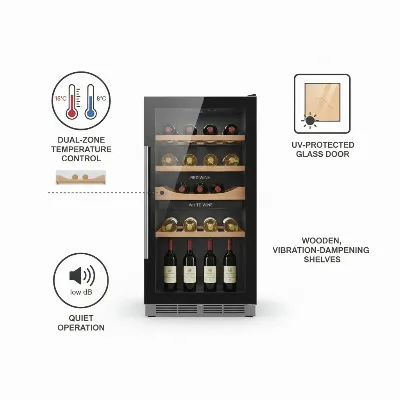 An infographic illustrating key features of a wine cooler such as dual-zone temperature, UV-protected glass, wooden shelves, and quiet operation in a modern graphical style
How to Use and Maintain Your Freestanding Wine Cooler Correctly
Proper usage and regular maintenance are crucial for maximizing the lifespan and performance of your freestanding wine cooler, ensuring your wine collection is always in pristine condition.
First, proper placement is vital. Always position your freestanding cooler in a cool, shaded area away from direct sunlight, heat sources (like ovens or radiators), and heavy vibrations. Ensure there’s adequate air circulation around the unit; typically, at least 2-3 inches on the sides and 12 inches at the top are recommended for rear/side-venting models. Placing it on a level surface is also important for efficient operation and a tight door seal.
When arranging bottles, avoid overstocking your cooler, as this can restrict airflow and hinder proper cooling. While keeping the cooler at least 75% full helps improve energy efficiency, overcrowding will have the opposite effect. Group similar wines together and arrange them for easy access, minimizing the need to constantly move bottles around. Always refer to your unit’s instruction manual for specific shelving recommendations.
Regular cleaning is paramount. Unplug the cooler and remove all bottles and shelves. Use a soft cloth and a mild, unscented cleaning solution (like vinegar and water) to clean the interior, shelves, and door seals. Harsh chemicals can leave residues or damage the cooler’s surfaces. Wipe down the exterior with a damp cloth. This internal cleaning should be done at least once a year, with external wiping as needed.
Periodically check the door gasket for any signs of wear, hardening, or damage. A compromised seal allows warm air to enter, forcing the compressor to work harder and potentially leading to temperature inconsistencies and increased energy consumption. You can test the seal by shining a flashlight from inside the cooler and checking for light leakage around the door. If a leak is detected, the gasket may need repair or replacement.
Finally, clean the condenser coils located at the back or bottom of the cooler every six months. Dust and debris buildup on these coils significantly reduces cooling efficiency and strains the compressor, shortening its lifespan. Use a vacuum cleaner with a brush attachment to gently remove any accumulation. By following these maintenance tips, you can significantly extend the life of your wine cooler and ensure consistent, optimal storage conditions for your cherished wines.
Conclusion
Choosing the best freestanding wine cooler for your home bar in 2026 is an investment in preserving the quality and enjoyment of your wine collection. From understanding the benefits of precise temperature and humidity control to differentiating between compressor and thermoelectric systems, making an informed decision ensures your bottles are always perfectly stored. By considering factors like capacity, noise levels, energy efficiency, and design, along with diligent maintenance, you can select a unit that not only meets your practical needs but also enhances the aesthetic of your entertainment space. With the right wine cooler, every pour from your home bar promises to be a delightful experience.
What unique features are you most excited to integrate into your ideal home bar wine cooler setup?
Frequently Asked Questions
What is the ideal temperature range for storing wine in a freestanding cooler?
Most wine experts recommend storing all wines, regardless of type, at a consistent temperature between 50-59°F (10-15°C) for long-term preservation. However, serving temperatures vary, with white and sparkling wines often chilled to 45-55°F and red wines best served between 60-68°F. Many dual-zone coolers cater to these varied serving needs.
How much space should I leave around a freestanding wine cooler for ventilation?
Freestanding wine coolers typically vent from the rear or sides, requiring adequate clearance for proper heat dissipation. A general guideline is to leave at least 2-3 inches of space on the sides and 12 inches at the top. This ensures efficient operation, prevents overheating, and contributes to the unit’s longevity.
Can I store different types of wine (red, white, sparkling) in a single-zone freestanding wine cooler?
While you can technically store different types of wine in a single-zone cooler, it’s not ideal for optimal serving conditions for all. A single zone maintains one consistent temperature, which might be perfect for aging but not for immediate serving of both reds and whites at their preferred temperatures. For diverse collections, a dual-zone cooler is highly recommended.
How often should I clean my freestanding wine cooler?
Regular cleaning is important for optimal performance. The exterior should be wiped down as needed, while the interior and shelves benefit from a thorough cleaning at least once a year with a mild, unscented solution. Condenser coils, usually located at the back or bottom, should be vacuumed every six months to prevent dust buildup and maintain cooling efficiency.
Are wooden shelves better than wire shelves in a wine cooler?
Wooden shelves are often preferred over wire racks in Wine Coolers, particularly for long-term storage, because wood is generally better at absorbing minor vibrations from the cooling system. This helps to keep wine sediments undisturbed, which is crucial for preserving the wine’s flavor and aging potential. They also tend to look more elegant.