Discovering a layer of ice inside your beloved wine cooler can be alarming. Not only does it hinder your appliance’s performance, but it also threatens the optimal conditions your wine collection needs to thrive. A freezing wine cooler isn’t just an inconvenience; it’s a clear signal that something isn’t right, potentially jeopardizing the flavor and longevity of your cherished bottles. This guide will walk you through the precise steps to safely defrost your wine cooler at home, ensuring both your appliance and your wines are protected throughout the process.
What Causes Your Wine Cooler to Freeze?
A wine cooler is designed to maintain a consistent temperature and humidity, providing an ideal environment far superior to a regular refrigerator. When ice begins to form, typically on the back wall, it indicates a disruption in this delicate balance. The primary culprit is often moist air infiltrating the unit during its cooling cycle. This moisture then condenses and freezes, forming the ice layer. Common causes include frequently opening the door, which allows humid external air to enter, or a faulty door seal that no longer creates an airtight closure. Overloading the cooler can also obstruct proper airflow and prevent the door from sealing completely. Additionally, improper insulation or issues with the cooling system, such as dirty condenser coils, clogged filters, or even low refrigerant levels, can contribute to freezing by forcing the unit to work harder and drop temperatures excessively.
Signs Your Wine Cooler Needs Defrosting
Recognizing the early signs of ice buildup is crucial to prevent further issues and potential damage to your wine. The most obvious indicator is visible ice or frost accumulation inside the cooler, often on the back wall where the evaporator is located. You might also notice your wine cooler struggling to maintain its set temperature, leading to temperature fluctuations that are detrimental to wine storage. Another sign could be a decrease in cooling efficiency, meaning your wines aren’t as cool as they should be, despite the unit running continuously. Sometimes, an increase in operational noise can also signal that the compressor is working overtime to compensate for the ice buildup. If left unaddressed, this ice can eventually freeze your wine bottles themselves, which is a worst-case scenario for any wine enthusiast.
Essential Tools and Preparations for Defrosting
Before you begin the defrosting process, gathering the right tools and making proper preparations will ensure a smooth and safe experience. You’ll need an ample supply of towels or old newspapers to absorb melted water, along with shallow pans or buckets to collect any larger pools. A soft cloth or sponge and a mild cleaning solution, such as diluted vinegar or gentle dish soap with warm water, will be essential for cleaning the interior. While not strictly necessary, a plastic scraper can carefully help remove loose ice, but never use sharp tools like knives or metal scrapers, as these can damage the internal components. For speeding up the process, a fan or a hair dryer on a low, cool setting can be used with extreme caution, keeping a safe distance to prevent damage or overheating.
The preparation phase is equally important:
- Empty the Cooler: Carefully remove all wine bottles, shelves, and racks. Store your wines in a cool, dark place away from direct sunlight while the cooler is defrosting.
- Unplug the Unit: Always turn off and unplug the wine cooler from its power source to prevent electrical hazards and allow the ice to melt naturally without straining the appliance.
- Protect Your Floor: Place towels or a waterproof mat underneath and around the wine cooler to catch any meltwater and protect your flooring.
Step-by-Step Guide: How to Safely Defrost Your Wine Cooler
Defrosting your wine cooler doesn’t have to be a daunting task. By following these steps, you can safely and effectively remove ice buildup and restore your appliance to optimal performance.
Prepare the Area
|
Our Picks for the Best Wine Cooler in 2026
As an Amazon Associate I earn from qualifying purchases.
|
||
| Num | Product | Action |
|---|---|---|
| 1 | Wine Enthusiast 32-Bottle Dual Zone MAX Compressor Wine Cooler – Freestanding Mini Fridge with Digital Touchscreen, LED Display, Split Storage for Red & White Wines, Matte Black Refrigerator Home Bar |

|
| 2 | BLACK+DECKER Wine Cooler 8 Bottle,Wine Fridge Thermoelectric with Mirrored Front,Freestanding Wine Cooler Refrigerator &LED Display,BD60326 |
|
| 3 | Ivation 12 Bottle Compressor Wine Cooler Refrigerator w/Lock, Large Freestanding Wine Cellar Fridge, 41f-64f Digital Temperature Control Glass Door Black |
|
| 4 | BLACK+DECKER BD60026 Wine Cellar with LED Display (8-Bottle Capacity) |
|
| 5 | Ivation Premium 6 Bottle Horizontal Thermoelectric Wine Cooler/Chiller Counter Top Red & White Wine Cellar w/Digital Temperature, Freestanding Refrigerator Quiet Operation Fridge |
|
| 6 | Wine Enthusiast 6-Bottle Countertop Wine Cooler – Compact Mini Fridge for Kitchen or Bedroom with 3 Shelves, Energy-Efficient Cooling, Adjustable Digital Temperature Control |
|
| 7 | Ivation Premium Stainless Steel 8 Bottle Horizontal Thermoelectric Wine Cooler/Chiller Counter Top Red & White Wine Cellar w/Digital Temperature, Freestanding Refrigerator Quiet Operation Fridge |
|
| 8 | BLACK+DECKER Wine Fridge 12 Bottles, Thermoelectric Wine Cooler Refrigerator with Mirrored Front, Freestanding 12 Bottle Wine Fridge, BD60336 |
|
| 9 | Cuisinart CWC-800CEN 8-Bottle Private Reserve Wine Cellar |
|
| 10 | Ivation 12 Bottle Red And White Wine Thermoelectric Wine Cooler/Chiller Counter Top Wine Cellar with Digital Temperature Display, Freestanding Refrigerator Smoked Glass Door Quiet Operation Fridge |
|
After unplugging your wine cooler and protecting your floor, ensure you have sufficient space around the unit to work comfortably. This includes having your towels, pans, and cleaning supplies within easy reach. Clearing the surrounding area also helps with air circulation, which can aid in the natural melting process.
Remove Contents and Shelves
Carefully take out all wine bottles, shelves, and any removable racks or drawers from the wine cooler. Store your precious wine collection in a stable, cool, and dark location, perhaps a pantry or cellar, to protect them from temperature fluctuations during the defrosting period. This step not only safeguards your wine but also provides unobstructed access to the cooler’s interior for thorough defrosting and cleaning.
Initiate Defrosting
The safest and most recommended method for defrosting is to simply allow the ice to melt naturally. With the door open, warm air will circulate inside, slowly turning the ice into water. This process can take anywhere from a few hours for light frost to 24 hours or even longer for heavy ice buildup.
If you wish to accelerate the process, proceed with caution:
- Warm Water Method: Place a shallow tray or bowl of hot (but not boiling) water inside the cooler and close the door. The steam will help to loosen and melt the ice. Remember to check and replace the water periodically as it cools.
- Fan/Hair Dryer: You can use a fan to blow room-temperature air into the unit or a hair dryer on its lowest, coolest setting. Maintain a safe distance and keep the airflow moving constantly to avoid concentrating heat on one spot, which could damage the interior.
> “Patience is key when defrosting. Rushing the process with sharp objects or excessive heat can lead to irreversible damage to your wine cooler’s cooling system.” – Dr. Evelyn Reed, Appliance Engineering Specialist
Managing Melted Ice
As the ice melts, regularly absorb the water with your towels or empty the collection pans. This prevents water from pooling inside the unit or overflowing onto your floor. Replace saturated towels as needed to maintain a dry perimeter.
Cleaning and Drying
Once all the ice has completely melted and all water has been removed, it’s time for a thorough cleaning. Use a soft cloth or sponge with a mild solution of warm water and a small amount of white vinegar or gentle dish soap to wipe down the interior surfaces. Pay attention to any corners or crevices where grime might accumulate. This not only cleans but also helps neutralize any odors. After cleaning, use a dry, clean cloth to wipe the entire interior until it is completely dry. Any residual moisture can lead to new ice formation once the unit is restarted.
Reassembly and Restart
Ensure the wine cooler’s interior is perfectly dry before reassembling the shelves and racks. Once everything is back in place, plug the unit back into its power source. Allow the wine cooler to run empty for at least 4-6 hours to stabilize its temperature and humidity levels before gradually returning your wine bottles. This stabilization period is crucial for optimal performance.
Preventing Future Freezing Issues
Proactive maintenance is the best defense against your wine cooler freezing up again. Here are key strategies to keep your unit running smoothly:
- Regular Cleaning: Periodically clean the interior, exterior, and especially the condenser coils and ventilation grilles. Dust and debris can hinder airflow and force the compressor to work harder, leading to potential freezing.
- Check Door Seals: Regularly inspect the door gasket for any cracks, tears, or signs of wear. A faulty seal allows humid air to seep in, which is a major cause of ice buildup. You can test the seal by closing the door on a piece of paper; if it slides out easily, the seal might need replacing.
- Proper Ventilation: Ensure your wine cooler has adequate space around it for proper airflow, especially if it’s a freestanding unit. For built-in models, verify that the ventilation channels are clear and unobstructed.
- Avoid Overloading: While tempting to maximize space, overfilling your wine cooler can impede air circulation and prevent the door from sealing properly. Adhere to the manufacturer’s recommended capacity.
- Minimize Door Openings: Limit how often and how long you open the wine cooler door. Each time it opens, warm, moist air enters, increasing the risk of condensation and ice.
- Monitor Humidity: In particularly humid environments, excess moisture can contribute to freezing. Consider using a dehumidifier in the room where the wine cooler is located if humidity is consistently high.
- Correct Temperature Settings: Ensure your wine cooler is set to the appropriate temperature for your wine type, usually between 8-18°C (46-64°F), and avoid setting it unnecessarily low, which can promote freezing.
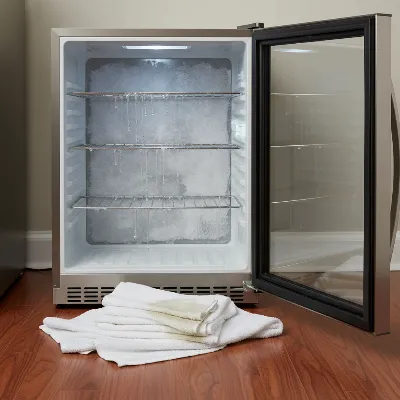 A wine cooler with its door open, showing ice melting naturally from the back wall, with towels placed on the floor to catch water.
Conclusion
Defrosting a freezing wine cooler is a necessary maintenance task that safeguards both your appliance and your valuable wine collection. By understanding the common causes of ice buildup, preparing adequately, and following a careful, step-by-step defrosting process, you can efficiently resolve the issue at home. Remember, natural defrosting is always the safest approach, even if it requires a little patience. Once defrosted and thoroughly cleaned, implementing preventative measures like regular inspections of door seals, proper ventilation, and mindful usage will help maintain your wine cooler’s optimal performance and prevent future freezing episodes. Keeping your wine cooler in top condition ensures your wines are always stored perfectly, ready to be enjoyed. What regular maintenance practices have you found most effective for your wine cooler?
Frequently Asked Questions
Why does ice frequently build up on the back wall of my wine cooler?
Ice buildup on the back wall often occurs because moist air from outside enters the cooler, condenses on the coldest surface (the evaporator coil), and then freezes. This can be due to a loose door seal, frequent door openings, or high ambient humidity.
Can I use a hairdryer to speed up defrosting my wine cooler?
Yes, you can use a hairdryer on a low, cool setting to gently accelerate the melting process. However, always keep it moving and maintain a safe distance from the internal components to avoid damage. Never use high heat or direct the air at one spot for too long.
How long does it typically take to defrost a wine cooler?
The defrosting time varies depending on the amount of ice. Light frost might melt in 4-6 hours, while moderate buildup could take 8-12 hours. Heavy ice can require 24 hours or even several days to melt completely through natural methods.
What should I do with my wine bottles while the cooler is defrosting?
During defrosting, store your wine bottles in the coolest, darkest place available in your home, such as a pantry, basement, or even a sturdy insulated box. The goal is to keep them at a stable temperature and away from light and vibrations as much as possible.
How can I check if my wine cooler’s door seal is working properly?
A simple test is to place a piece of paper in the doorframe and close the door on it. If you can easily pull the paper out, the seal might be compromised and allowing air to escape or enter. Repeat this test at several points around the door.
Is it normal for some condensation to form in my wine cooler?
A small amount of condensation can be normal, especially in humid environments or after opening the door. However, if condensation is excessive or consistently leads to ice formation, it indicates a problem with humidity control or air leakage.
When should I consider calling a professional for wine cooler freezing issues?
If your wine cooler continues to freeze despite regular defrosting and implementing preventative measures, or if you suspect a more serious issue like a faulty thermostat, refrigerant leak, or a broken compressor, it’s best to consult a qualified appliance technician.
